
Advancing battery recycling and second-life applications
The European project FREE4LIB (Feasible Recovery of critical raw materials through a new circular Ecosystem FOR a Li-Ion Battery cross-value chain in Europe) has officially concluded after four years of research into innovative solutions for more sustainable and circular lithium-ion batteries. Transport accounts for around one quarter of Europe’s greenhouse gas emissions, making the electrification of road transport an important pathway towards decarbonisation. However, the sustainability of electric vehicles also depends on their batteries. The extraction of critical raw materials, their manufacturing processes and the management of batteries at the end of their useful life remain key challenges that need to be addressed to reduce the environmental footprint of electric mobility.
Coordinated by CARTIF, FREE4LIB brought together 22 partners from research organisations, higher education institutions and SMEs across five EU countries and Turkey. The consortium worked to develop new solutions for recovering critical raw materials from end-of-life lithium-ion batteries and promoting their reuse, helping to establish a more circular and sustainable battery value chain in Europe. IREC is one of the partners of the project, bringing together three research departments at the institute: the Battery Materials group, the Power Systems Department and the Energy Systems Analytics Department.
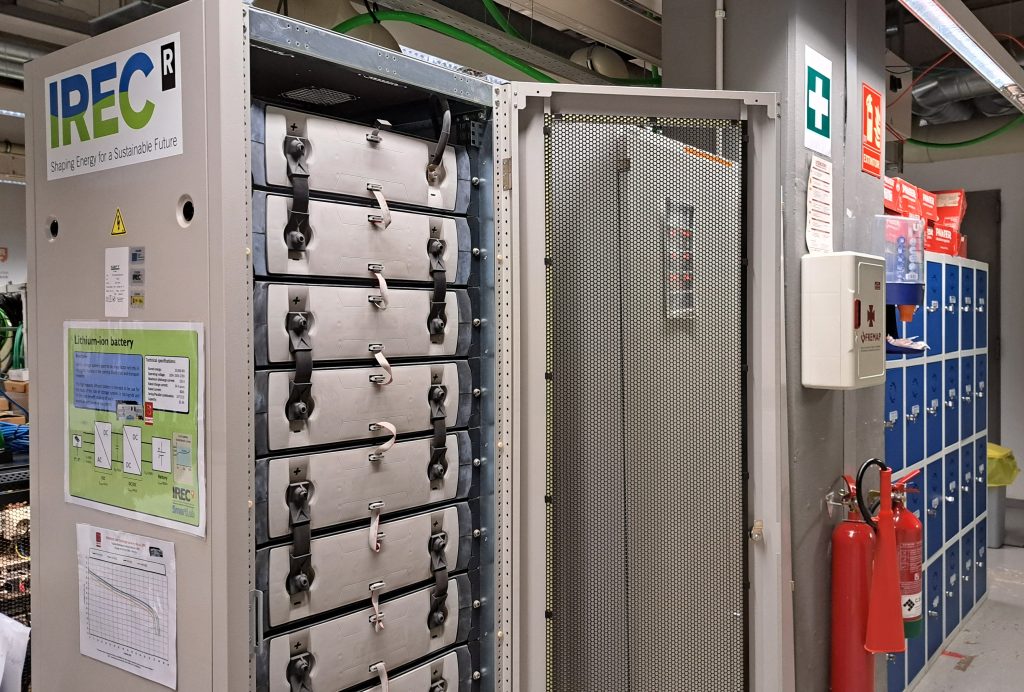
IREC’s work covered several key areas of the project. The Battery Materials Group focused on the physicochemical, structural and electrochemical characterisation of recycled materials produced within the consortium. The team also explored new direct recycling approaches based on techniques such as atomic layer deposition (ALD), magnetron sputtering and cathodic arc evaporation. This work established important structure–property relationships for direct recycling routes involving NMC811 and LNMO cathode materials, including the optimisation of their defect content and structure. The Power Systems Department developed a novel Battery Management System (BMS) with a flexible design that enables its use across both first- and second-life applications, as well as with different battery technologies and applications. The system was extensively validated in emulated environments at IREC’s facilities. The Energy Systems Analytics Department contributed to the development of ecodesign guidelines aimed at facilitating battery recycling and second-life applications. The team collected and analysed information from the project’s different work packages to identify opportunities to improve material recovery, facilitate the use of recovered active materials and reduce the environmental impact of recycling activities.
Through these contributions, IREC has supported the development of more circular battery technologies, addressing challenges ranging from materials recovery and battery management to ecodesign and the integration of batteries into second-life applications, working towards more sustainable and circular battery value chains in Europe.
Acknowledgements: Funded by the European Union. Views and opinions expressed are however those of the author(s) only and do not necessarily reflect those of the European Union or CINEA. Neither the European Union nor the granting authority can be held responsible for them.