REAHUB launches to advance data-driven building renovation across Europe
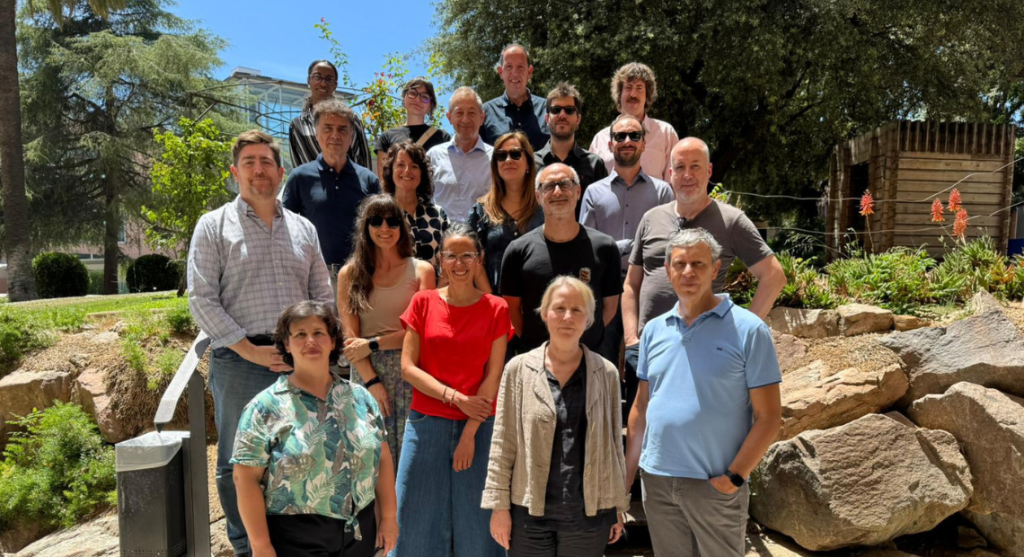
REAHUB, a project funded by the European Union under the LIFE Clean Energy Transition (LIFE CET) sub-programme, officially started on 1 June 2026. The consortium held its kick-off meeting on 18 and 19 June in Barcelona, marking the beginning of the project’s collaborative activities.
Coordinated by La Salle, Ramon Llull University, REAHUB brings together a multidisciplinary consortium of ten organisations from Austria, Belgium, Italy and Spain, combining expertise in research, public administration, digital technologies, consultancy, industry and capacity building. The project aims to support the implementation of the revised Energy Performance of Buildings Directive (EPBD) through practical, data-driven solutions.
REAHUB addresses one of the key challenges of building renovation in Europe: translating ambitious policy objectives into effective local action. To achieve this, the project is developing an integrated framework that connects policies, data sources, digital tools and renovation processes into a coherent ecosystem, supporting evidence-based decision-making from the building to the city scale.
At the heart of the project is the REAHUB platform, which will provide municipalities, policymakers, practitioners, financial institutions and building owners with the tools, services, procedures and training resources needed to support every stage of the renovation process. By bringing together existing data, methodologies and digital solutions, the platform will facilitate more coordinated renovation planning and implementation across different governance levels.
The framework will be developed and tested through pilot activities in Styria and Lower Austria (Austria), Piedmont (Italy) and Catalonia (Spain). These demonstration activities will generate practical insights and replicable solutions that can support building renovation efforts across Europe.
“We are currently at a crucial juncture where EU decarbonisation guidelines, reflecting the climate situation, geopolitical realities and economic needs, must be implemented at the local level. REAHUB aims to address this challenge by offering existing and freely available solutions tailored to specific needs, together with training and support that enable key stakeholders to acquire the skills and tools needed to take action.”
says Jordi Pascual, Senior Researcher leading IREC’s activities in the project.
IREC will lead the stakeholder co-design and needs assessment activities, co-develop building archetypes and data workflows, and co-lead the Spanish pilot implementation. The institute will also be responsible for the KPI and impact framework, providing evidence for replication and exploitation, as well as contributing policy briefs, training materials and technical content aligned with the platform’s services.
The project is funded under the LIFE Clean Energy Transition (LIFE CET) sub-programme of the LIFE 2021–2027 Programme, which supports the implementation of European energy and climate policies by strengthening governance, building capacity, mobilising investment and accelerating the uptake of clean energy solutions.
For more information about the project or participation in local implementation activities, please contact the Project Coordinator, Leandro Madrazo, at leandro.madrazo@salle.url.edu.
Acknowledgements
Co-funded by the European Union. Views and opinions expressed are however those of the author(s) only and do not necessarily reflect those of the European Union or the European Climate, Infrastructure and Environment Executive Agency (CINEA). Neither the European Union nor the granting authority can be held responsible for them.