
IREC contributes to institutional policy dialogue on local energy communities
IREC has published the policy brief “Enabling Local Energy: How Umbrella Entities Make Energy Communities Scalable and Replicable” in the framework of the Institutional Dialogue Project of the Interreg Euro-MED Green Living Areas Mission. The brief highlights the role of umbrella entities as key enablers for scaling and replicating local energy communities, and provides targeted recommendations for public authorities and European funding programmes.
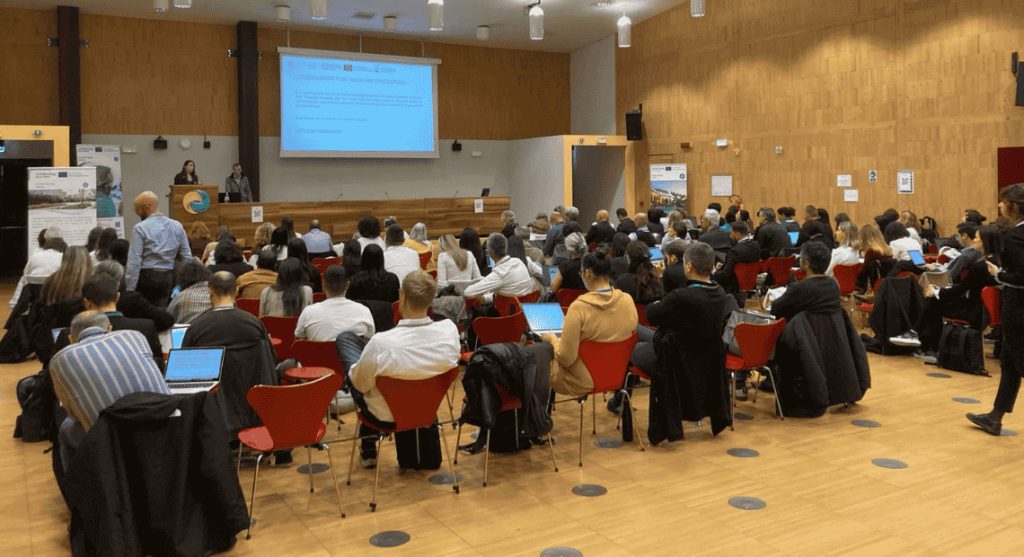
The publication was authored by Diana Zanabria and Jordi Pascual (IREC), in collaboration with Rui Mendes (Lisboa E-Nova) and Ermen Llobet (OECOOP). It builds on the outcomes of the 2nd Institutional Dialogue Event (Brussels, October 2025), where IREC designed and facilitated the co-development session on energy communities, featuring OECOOP ’s cooperative model as a replicable best practice.
The brief identifies key barriers to scaling community energy initiatives—such as regulatory complexity, limited technical capacity and fragmented support—and underlines the importance of structured support mechanisms. In this context, umbrella entities emerge as essential actors to provide technical assistance, coordination and capacity building across territories.
Among its main recommendations, the brief calls for the formal recognition of umbrella entities in policy frameworks, the provision of long-term operational funding, the expansion of technical assistance programmes, and stronger multi-level governance.
Read the full policy brief here, and the article from green living areas here.
The Institutional Dialogue Project of the Interreg Euro-MED Green Living Areas Mission (Interreg Euro MED program) is co-funded by the European Union and has received the UfM label.
