
RETABIT is now launched to support building stock decarbonization
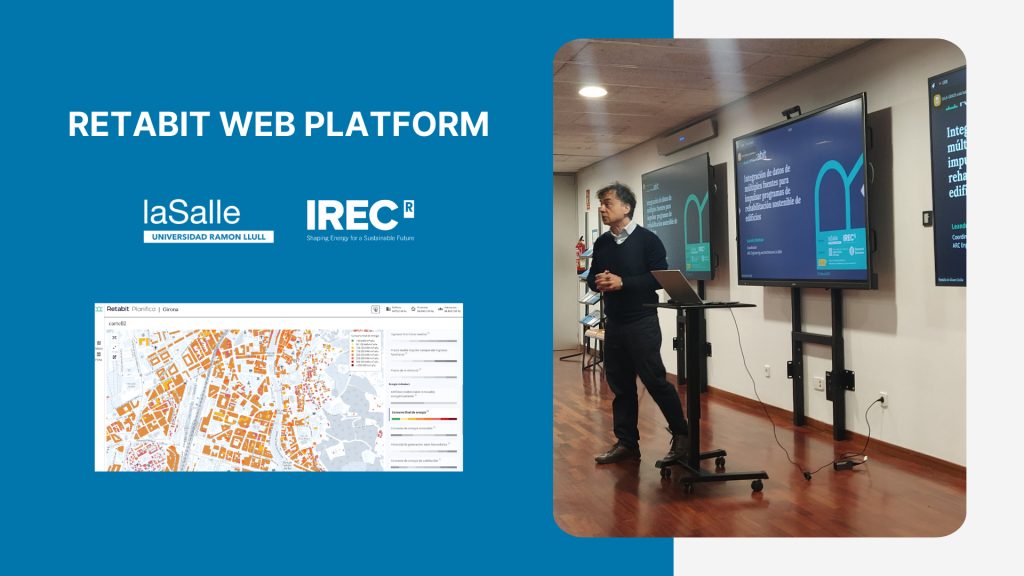
The RETABIT project, developed by La Salle and IREC, has created an innovative platform to support municipalities in the planning and the deployment of the Sustainable Energy and Climate Action Plans (SECAPs), specifically, the retrofitting of the building stock. The platform is designed to be adaptable to different local contexts, helping municipalities assess their current building stock, and explore possible decarbonization scenarios, depending on end-user criteria, preferences and urgencies.
Working closely with regional governments and municipalities, the project applies case-based research to identify the needs of stakeholders involved in urban planning. Different key demo cases and stakeholders (Sant Cugat del Vallès, Rubí, Diputació de Barcelona, Agència d’Energia de Barcelona or Fundació Europace), with different needs and characteristics, have served as real-world test cases to evaluate the platform’s usability and effectiveness in daily operations.
The platform’s development follows an agile, iterative methodology, ensuring continuous improvement based on real data and user feedback. It integrates qualitative and quantitative methods to define sustainability indicators, enabling a holistic approach to building renovation. By incorporating multiscale and multidimensional models, the platform analyses urban areas at the neighbourhood and district levels, considering environmental, social, and economic factors.
A key feature of RETABIT is the creation of building archetypes that categorize urban areas based on physical characteristics, architectural value, social aspects (such as family structure and income level), and economic factors like real estate value and ownership status. These archetypes enhance the accuracy of renovation potential assessments and help municipalities design more effective retrofitting plans.
On March 20th, 2025, RETABIT hosted a final event aimed at professionals in the construction sector, public administrations, and organizations involved in sustainable rehabilitation. The session has demonstrated how open data integration and simulations facilitate strategic planning for residential building renovation in Catalonia. The event also fostered collaboration between key stakeholders, promoting initiatives aligned with energy efficiency, social equity, and urban sustainability to advance the decarbonization of the building sector.
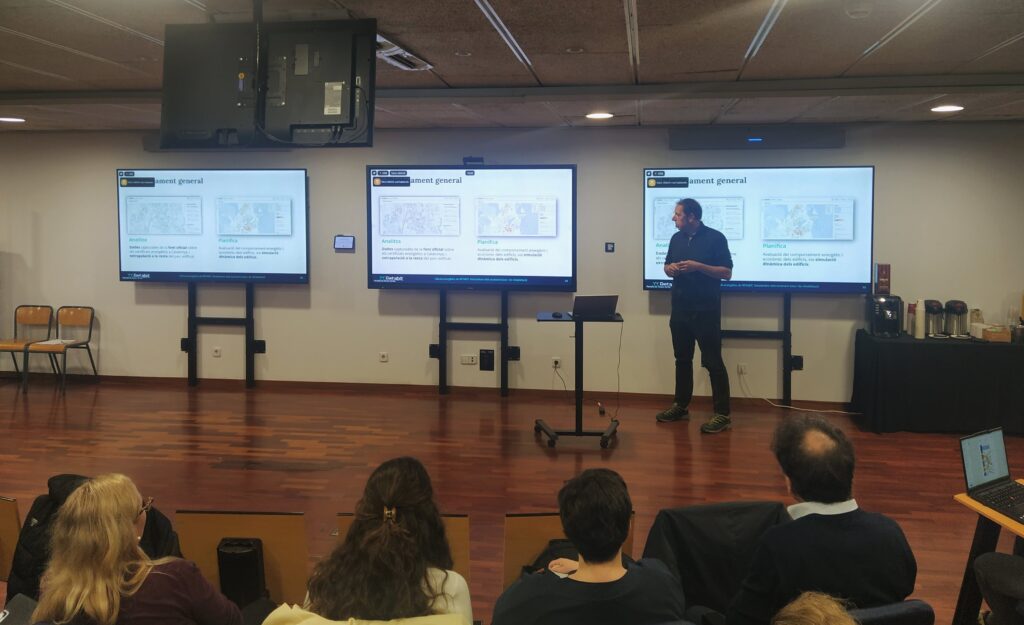
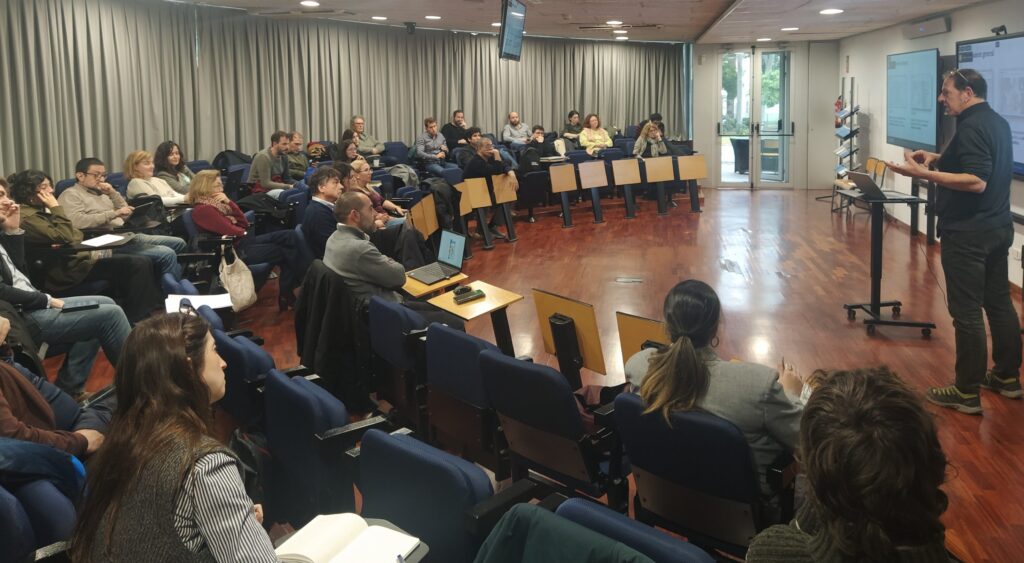
The researchers from the REACT Department at IREC involved in the development of this platform have been Jordi Pascual, Enric Mont, Davide Cerra and Angelos Mylonas. Their central role consisted in the definition and modelling of the energetic behaviour of the building stock, both regarding the current status and the potential passive and active retrofitting actions and scenarios.
Beyond the current open functionalities, the platform can be adapted locally by complementing it with data available at the municipal level. Furthermore, the platform is understood as an ongoing process, with new functionalities expected to be implemented in the near future by integrating AI based-systems, future climate scenarios, or capabilities for monitoring real-world interventions.
Acknowledgements (in Spanish): Este proyecto ha sido financiado a cargo del Programa Estatal de Generación de Conocimiento y Fortalecimiento Científico y Tecnológico del Sistema de I+D+i y de I+D+i Orientada a los Retos de la Sociedad, en el marco del Plan Estatal de Investigación Científica y Técnica y de Innovación 2017-2020. Financiado por el Ministerio de Ciencia e Innovación (MICINN) a través de la Agencia Estatal de Investigación.
