
A monitoring system pioneer in Europe will improve power grid failure surveillance in Barcelona area
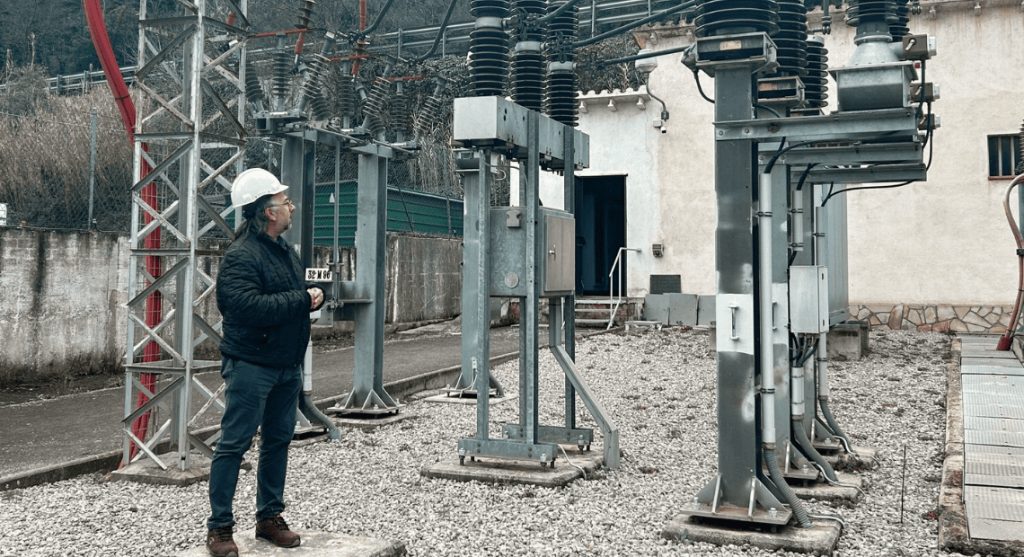
IREC and Anell, the electricity distribution subsidiary of the Estabanell Group, based in Granollers (Barcelona), have worked together on a power grid monitoring system that is a pioneer in Europe. This system improves the detection of grid instabilities with high precision, allowing for quicker anticipation of possible failures, like reducing the risk towards a blackout.
The new tool is based on PMUs (Phasor Measurement Units), which are devices that measure electrical waves with nanosecond precision. This significantly enhances monitoring capabilities, allowing automated systems to detect events or failures in the grid that remain invisible to traditional technologies like SCADA.
Estabanell’s Director of Innovation, Ramon Gallart, emphasized that “locating a fault requires the evolution of technology,” highlighting the importance of the new PMU they have developed.
Meanwhile, IREC senior researcher Antonio Pepiciello noted the importance of more effectively identifying “dynamic and transient events in the grid to prevent them from causing stability issues”—referring to incidents such as the blackout Spain experienced on April 28.
On that day, the Iberian Peninsula lost power and faced communication disruptions for several hours. Investigations into the cause of the widespread blackout are still ongoing. The Ministry for the Ecological Transition, led by Third Vice President Sara Aagesen, has requested more time to conduct a “full audit of the incident,” which involves analyzing over 750 million data points collected from the system operator and other companies.
Additionally, this new monitoring tool uses the European Galileo satellite navigation system instead of the US-based GPS, which is currently used by most PMUs.
Pepiciello pointed out that one of Galileo’s advantages is that it is “a European technology,” which he believes is essential because critical infrastructure like the power grid “should be based on continental technologies.” He also stressed that Galileo is more resilient to external cyberattacks.
Gallart also noted that Galileo helps with energy management thanks to real-time data synchronization and asset geolocation. He added that the new system developed with IREC has enabled them to rethink how data is collected and to make decisions based on it “immediately.”
The next step, which is already underway, is to apply integrated artificial intelligence (AI). Gallart explained that this would “catalyze, facilitate, and complement the management of the electrical infrastructure.”
A press release was published today in Catalan (CAT) and Spanish (ES):
This innovation was made possible within the framework of the European RESPONDENT project. RESPONDENT has received funding from the European Union’s Horizon Europe research and innovation programme under grant agreement no. 101082355.
