
Faster battery testing for safer and more competitive energy storage in Europe
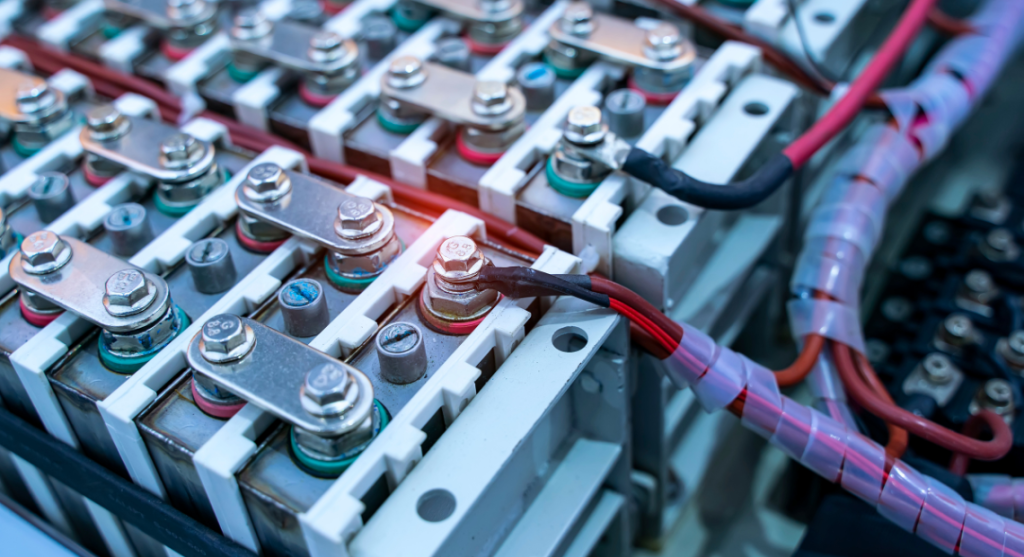
Europe’s battery industry is strategically important for the continent’s economic resilience, industrial competitiveness and climate transition. However, battery testing and validation remain a major bottleneck: current approaches can be lengthy, costly and fragmented, slowing development cycles and delaying the deployment of safer and more reliable battery systems.
To address this challenge, MISTRAL aims to transform battery testing and validation into a strategic accelerator for European battery innovation. To achieve this, the project will develop, validate and demonstrate an integrated framework for accelerated physical and virtual testing of battery ageing, reliability and safety, from cell to pack level. MISTRAL will combine early-life multi-physical characterisation, AI-assisted experimental design, physics-based and data-driven modelling and advanced X-in-the-loop validation. This approach will be demonstrated through three use cases covering an electric passenger car, an e-bus and stationary energy storage systems, with results designed to be transferable to second-life, e-mobility and stationary applications. The project held its kick-off meeting on the 14th of October in Barcelona, bringing together the full consortium to align objectives and set the roadmap for the coming years.
With a total budget of over 7M €, the project will run for 42 months, starting this October 2026. Coordinated by Eurecat, MISTRAL brings together 18 partners from across Europe, combining complementary industrial, research, testing, digital and standardisation actors covering the full battery value chain.
IREC will be responsible for leading the development of cell modelling and tests campaign definition. Additionally, IREC will participate in the unified validation framework, as well as in the experimentation in X-in-the-loop environment at component and system level. These activities will be led by Lluís Trilla from the Power Systems department.
Link to CORDIS: https://cordis.europa.eu/project/id/101319030
Acknowledgements
Funded by the European Union. Views and opinions expressed are however those of the author(s) only and do not necessarily reflect those of European Union or European Research Executive Agency (REA). Neither the European Union nor the granting authority can be held responsible for them.