
CUSTOM-ART demonstrates the first PV-integrated BIPV and PIPV prototypes under real-world operational conditions
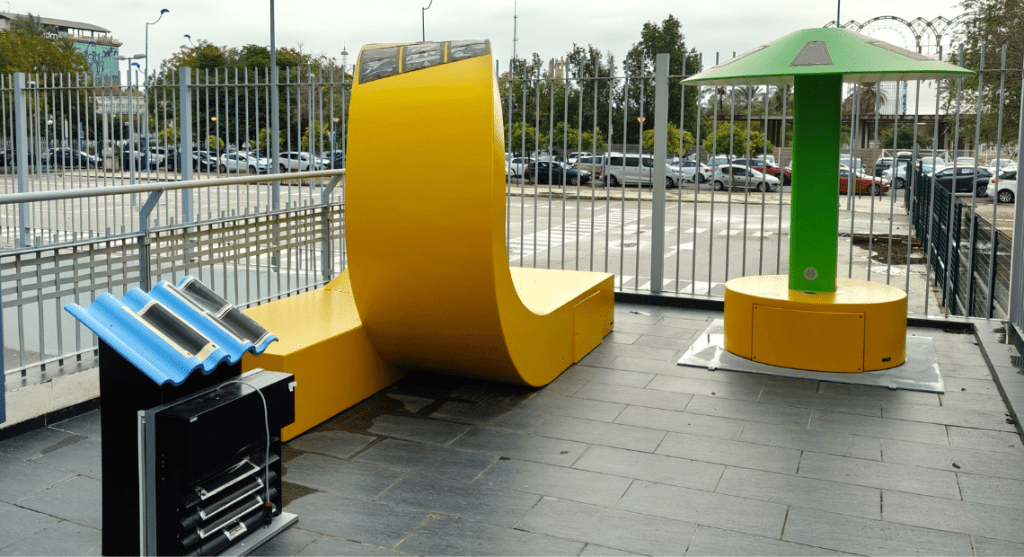
After 4 years of intensive work, CUSTOM-ART has concluded with the production and demonstration at real-world operational conditions of the first photovoltaic (PV) integrated product prototypes, achieving a relevant advance in kesterite technologies from TRL 4-5 to TRL 7.
Building Integrated Photovoltaic (BIPV) and Product Integrated Photovoltaic (PIPV) are increasingly recognized as indispensable solutions for energy efficiency. However, the materials available on the market often rely on elements that are either scarce, expensive, or pose toxicity concerns, presenting significant challenges for scalable and sustainable deployment. Therefore, there is a need for advancements in thin-film technologies that are not only economically viable and environmentally sustainable but also offer aesthetic functionalities, such as flexibility and customizable transparency.
To address this, the project aimed to develop next-generation BIPV and PIPV solutions based on earth-abundant thin-film materials like kesterites. As part of the project, CUSTOM-ART advanced kesterite technologies from TRL 4-5 to TRL 7, culminating in the design and production of the first PV-integrated product demonstrators that were monitored at real-world operational conditions. This required significant work in developing and optimizing kesterite-based technologies, with a thorough and detailed focus on material and cell-level optimization to overcome the key challenges currently limiting device efficiency and process scalability.
By incorporating Li via LiClO4 in Ag-alloyed kesterite material, CUSTOM-ART achieved a record device efficiency of 14.1% (15.1% after correction of reflection losses) in kesterite cells. Moreover, the successful transfer of processes to flexible steel substrates, achieving device efficiencies similar to those on glass substrates, along with the development of thin-film microcrystalline and monograin modules with improved efficiencies, were achieved. This allowed the design and production of the first BIPV and PIPV product prototypes that were monitored at real-world operational conditions in two different test sites located in Seville (Spain) and Innsbruck (Austria).
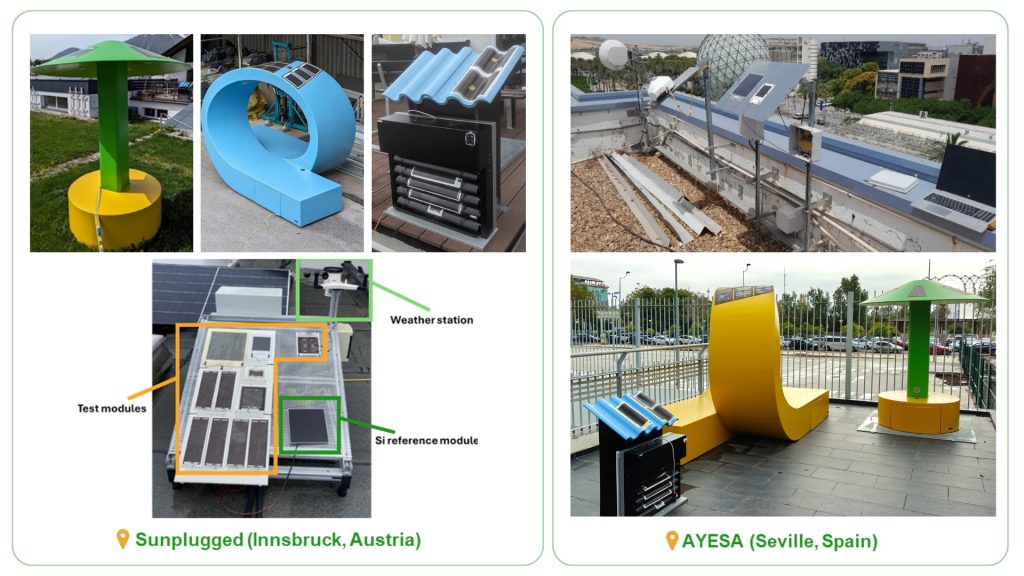
The analysis of the collected data demonstrates the viability of both BIPV and PIPV demonstrators, with estimated electricity generation aligning with the proposed product applications.
IREC contributed in the successful up-scale of the production processes of PV devices (up to 10×10 cm2 substrate sizes) with very high uniformity and reproducibility, and the development of advanced in-line monitoring methodologies based on the combined application of different characterization techniques and the implementation of machine learning algorithms for data analysis for production process optimization. Among other results, the developed methodologies allowed the identification of the main mechanisms limiting process uniformity in the up-scaled PV devices. Additionally, relevant advances were also made in the development of Cd-free alternative buffer layers with improved device efficiency in relation to the current CdSbuffers traditionally used in the kesterite device architecture.
Consortium
The project is led by Alejandro Pérez-Rodríguez, head of the Solar Energy Materials and Systems Department at IREC and the consortium involves 17 partners (IMEC, EMPA, Oldenberg University, HZB, Oxford Brookes University, ENEA, IPC, Uppsala University, Crystalsol, IMRA Europe, Ayesa, Eco Recycling, Sunplugged, Rescoll and KWS) and 3 third parties, including the world leading actors involved in the development of kesterite technologies.
Acknowledgments
This project has received funding from the European Union’s H2020 research and innovation programme under grant agreement number 952982.
