
Hi-BITS concludes with advances in high-efficiency and multifunctional CIGS photovoltaics
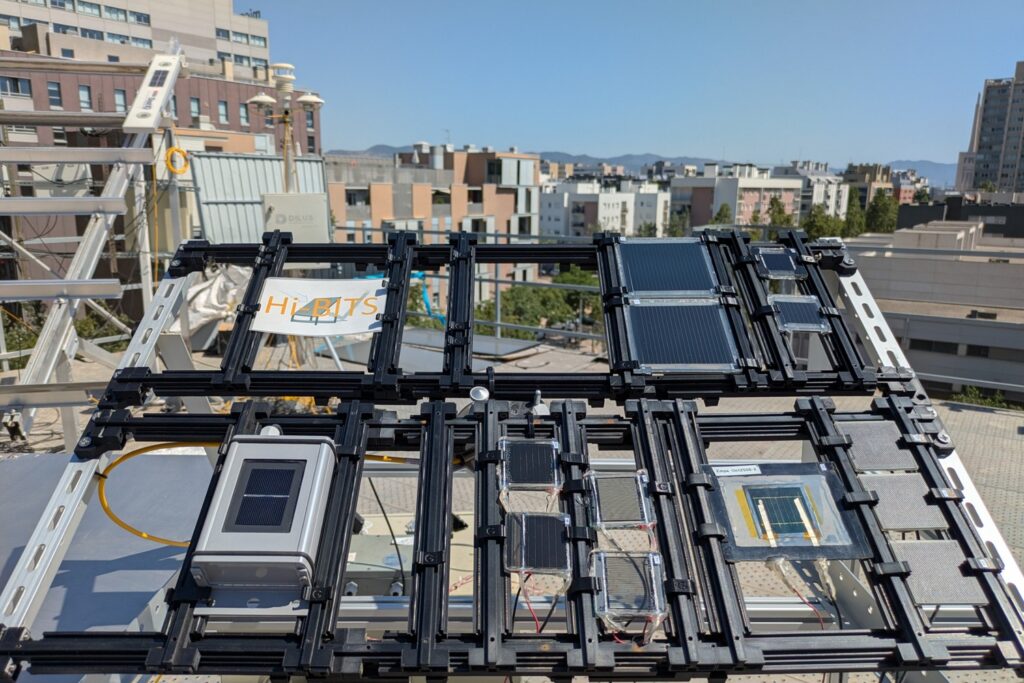
The Hi-BITS project (“High efficiency bifacial thin film chalcogenide solar cells”) has finalised three years of collaborative research involving leading European research centres, universities and industrial partners. The main goal of Hi-BITS was to develop a new generation of high-efficiency and multifunctional CIGS solar cells and modules.
The project explored four main application routes: bifacial devices, modules with highly reflective and functionalized back contacts, semi-transparent photovoltaics and CIGS-based tandem devices. These concepts target applications including conventional PV installations, building-integrated photovoltaics, Agri-PV and other emerging markets where conventional opaque modules are not always suitable.
IREC played a central role in two complementary areas of the project. First, IREC led the development of advanced methodologies for process monitoring and quality control of CIGS manufacturing. Working with the industrial and research partners, IREC combined fast, non-destructive spectroscopic techniques with physically meaningful quality-control parameters and machine-learning-based data analysis. These activities resulted in several methodologies for monitoring both conventional industrial CIGS fabrication steps and novel Hi-BITS processes. The work also established the steps required to progress towards automated quality control and ultimately closed-loop process feedback.
IREC also led the work dedicated to the real-life characterization of the developed module prototypes. A common outdoor monitoring methodology was established and applied to two generations of Hi-BITS modules installed at test sites in Spain, France and Germany. The optoelectronic parameters of the Hi-BITS modules were monitored together with irradiance, temperature and other environmental parameters. This provided detailed insights into the factors driving performance changes and enabled direct feedback for further improvements in the development of materials, devices and modules. The measurements showed generally stable outdoor operation for most investigated prototypes and demonstrated the strong influence of environmental and installation conditions on bifacial, semi-transparent and tandem-oriented concepts.
One of the main conclusions of Hi-BITS is that CIGS technology can be extended well beyond conventional monofacial modules. The project demonstrated technological routes towards bifacial operation, reflective back contacts, semi-transparent modules and tandem-compatible devices, opening opportunities for more efficient use of light and for integration of photovoltaics into buildings, agriculture and other application-specific environments. These developments reinforce the potential of thin-film CIGS as a versatile European photovoltaic technology.
The consortium is formed by 13 European partners and 2 associated partners including Laboratorio Iberico Internacional de Nanotecnologia (leader), IREC, CNRS, ZSW, UPPSALA University among other. At IREC, the activities were led by Maxim Guc, together with Gina Soracá and Fernando Miranda, all from the Solar Energy Materials and Systems research department.
Funded by the European Union. Views and opinions expressed are however those of the author(s) only and do not necessarily reflect those of the European Union or European Climate, Infrastructure and Environment Executive Agency (CINEA). Neither the European Union nor the granting authority can be held responsible for them.