
HIDDEN-PV advances new photovoltaic technologies for more integrated solar applications
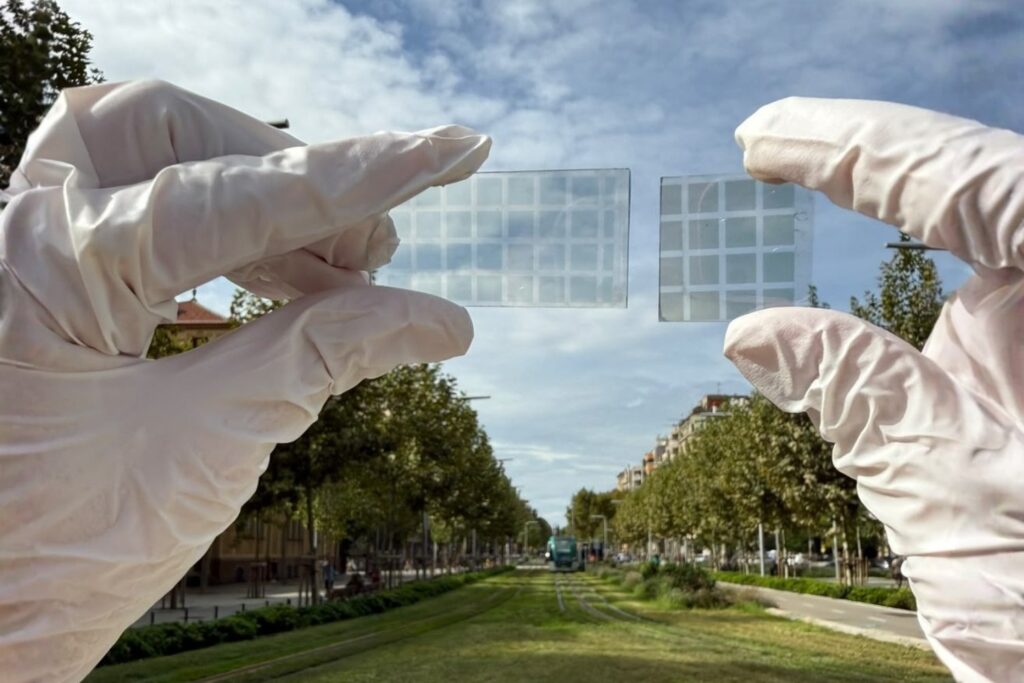
After three years of research, HIDDEN-PV has delivered key advances in photovoltaic technologies for integrated applications, including visually transparent devices with record open-circuit voltages, a two-fold improvement in performance under indoor illumination, and the transfer of high-performing cells to flexible polymeric substrates. These results bring photovoltaic technologies closer to applications where conventional solar panels face limitations related to illumination conditions, visual impact or integration.
The project focused on photovoltaic devices based on earth-abundant, low-toxicity materials, advancing Sb(S,Se)I-based technologies for indoor and diffuse illumination and (Zn,Mg)(O,S,Se)-based technologies for transparent photovoltaics. In parallel, the consortium investigated ultra-thin device architectures, flexible substrates and eco-efficient fabrication approaches to improve the sustainability and integration potential of the resulting devices.
This work generated new knowledge on emerging photovoltaic materials and device concepts, while also progressing towards lighter, more flexible technologies and more scalable manufacturing processes, including printing and roll-to-roll-compatible approaches.
IREC contributed to the development and characterisation of novel wide-bandgap PV materials and devices based on Sb(S,Se)I and (Zn,Mg)(O,S,Se), as well as to strategies to reduce their visual impact and improve their integration. In collaboration with the Center for Physical Sciences and Technology (FTMC) and the University of Luxembourg, the SEMS department at IREC developed the visually transparent photovoltaic devices achieving record open-circuit voltages with colour rendering index >98% and apparent visual transparency of >70%. The team also developed devices that doubled performance under indoor illumination, reaching 14% power conversion efficiency (PCE), and successfully transferred these record-performing cells to flexible polymeric substrates.
In addition, the Energy System Analytics Department carried out a life cycle assessment (LCA) of the materials and processes developed, assessing their environmental impact and identifying strategies to optimise future industrial-scale production. The analysis indicated that, under scale-up scenarios, these photovoltaic cells could offer environmental benefits compared with non-rechargeable batteries for indoor sensor applications.
Overall, the results provide a basis for the further development and scale-up of photovoltaic solutions with reduced visual impact and greater flexibility of integration, opening opportunities in areas such as IoT and indoor sensors, buildings, vehicles, urban environments and agrivoltaics.
Acknowledgements
Project HIDDEN-PV (PCI2023-143430) was selected in the Joint Transnational Call 2022 of M-ERA.NET 3, which is an EU-funded network of about 49 funding organisations (Horizon 2020 grant agreement No 958174). The project HIDDEN-PV (PCI2023-143430) is funded by the MCIU/AEI/10.13039/501100011033 and co-financed by the European Union.
