
HySPRINT project launches to advance sustainable hydrogen production
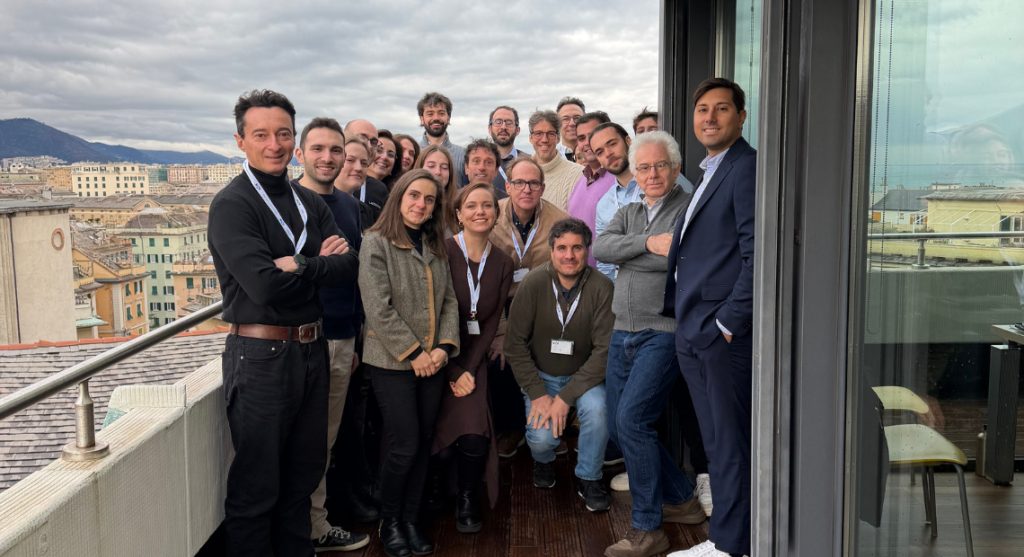
The HySPRINT project (Hydrogen Scale-up and Production through Innovative high-temperature SOEC manufacturing techniques optimized with AI and Quality control Tools) has officially started, aiming to make high-temperature electrolysis cells more sustainable, cost-effective, and recyclable. The project combines advanced manufacturing techniques for each key component of the cell: inkjet printing for the oxygen electrode, Physical Vapor Deposition (PVD) magnetron sputtering for the barrier layer, and the proprietary ReScale method for the steam electrode and electrolyte. AI-driven optimization and the Advanced Electrode Manufacturing Supervisor (AEMS) tool will enhance automation, improve quality, and reduce waste. Components will be scaled up to Manufacturing Readiness Level 5 (MRL5) and tested to reach Technology Readiness Level 6 (TRL6), with feasibility studies for stacks up to 30 kW.
The project has a total budget of ~4M€ and will run for 3 years, starting from January 2026. The project brings together a strong consortium of partners: RINA Consulting S.p.A as coordinator, SolydEra, EURECAT, IREC, AEA, F6S Network, TORRECID, Dynelectro and Università degli Studi dell’Aquila.
The role of IREC in the project consists of the development of inkjet-printed oxygen electrodes and providing support in the development of PVD barrier layers. In addition, IREC will assess the benefits of the advanced solutions proposed in HySPRINT and contribute to upscaling efforts toward large-scale cell production. This activity is led by Alex Morata from the Nanoionics and Fuel Cell Department.
Sustainability and circularity are central to HySPRINT. Eco-design and design-for-recycling guidelines will make the cells easy to disassemble and recycle, while strategies to reduce Critical Raw Materials and increase the share of recycled materials will further improve environmental performance.
HySPRINT sets a new benchmark for scalable, low-impact hydrogen production, combining innovation, AI optimization, and circularity principles to support a sustainable energy transition.
Link to cordis: https://cordis.europa.eu/project/id/101250891
Funded by the European Union. Views and opinions expressed are however those of the author(s) only and do not necessarily reflect those of the European Union or Clean Hydrogen Joint Undertaking. Neither the European Union nor the granting authority can be held responsible for them.
