
Results and lessons from the citizen science project Vigilants de la calor
This January, the citizen science project Vigilants de la calor, promoted by the Metropolitan Area of Barcelona, and developed by the Institute Metròpoli, and the Catalonia Institute for Energy Research, with the support of the European IMPETUS program, has ended.
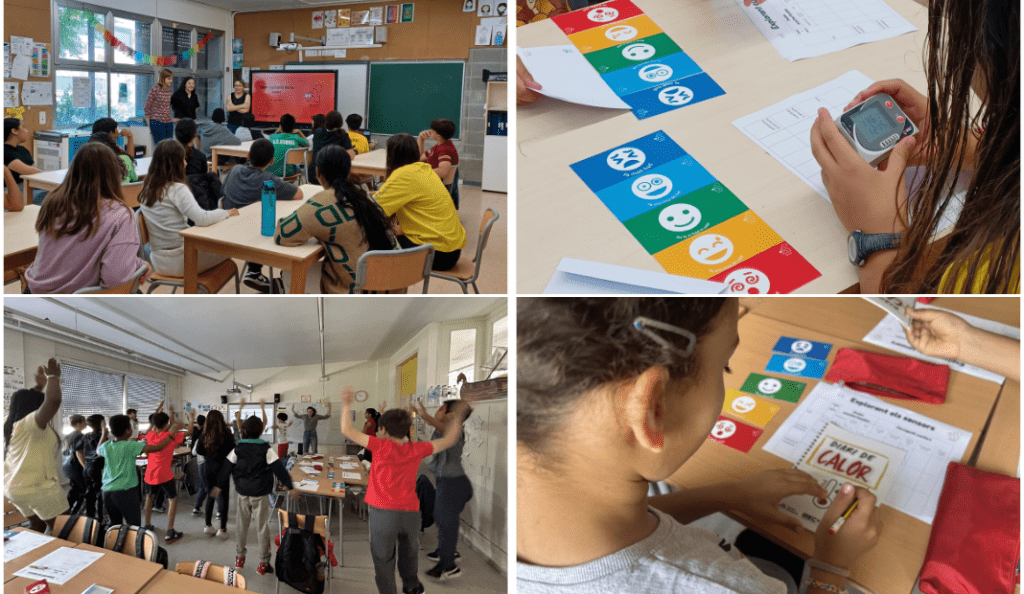
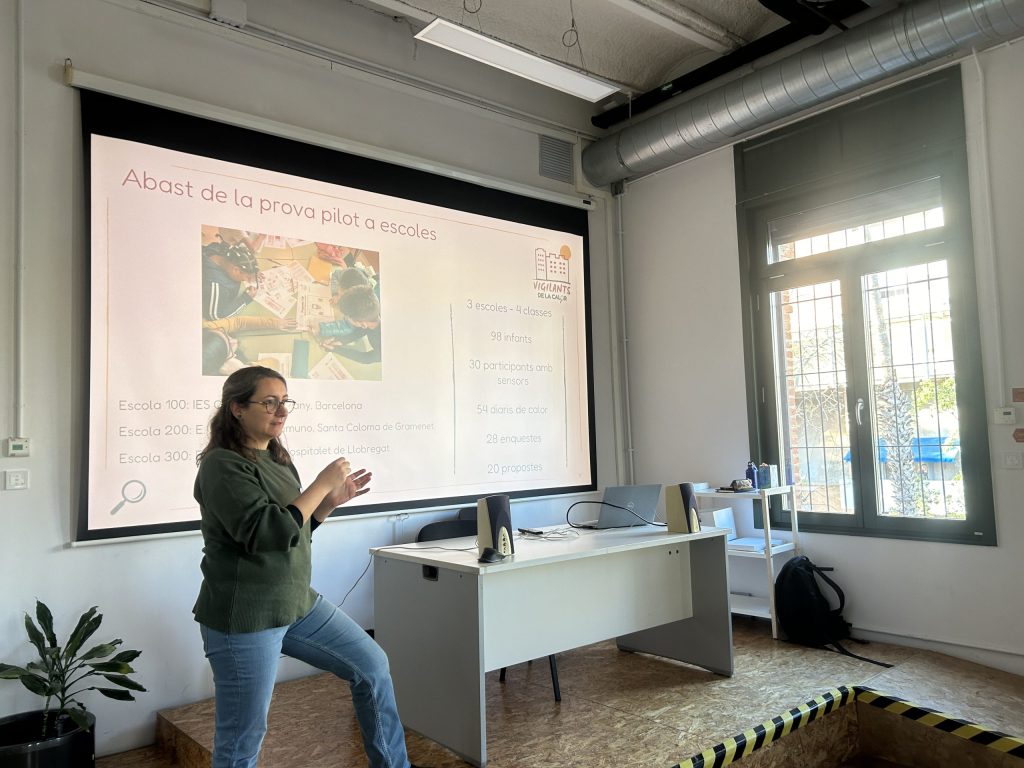
With the aim of generating new data to influence public policies and adapt cities and homes to climate change and extreme heat, Vigilants de la calor has had the active participation of 98 students aged 10 to 12 from three schools located in climate-vulnerable and socio-economically disadvantaged areas of metropolitan Barcelona: Institut-Escola Coves d’en Cimany (Barcelona), Escola Miguel de Unamuno (Santa Coloma de Gramenet), and Escola Pep Ventura (Hospitalet de Llobregat). After 4 training sessions about climate change and thermal comfort, students registered their perception of thermal comfort during different periods through a “Heat diary”. Moreover, 30 students gathered data about thermal comfort in their homes with the help of sensors.
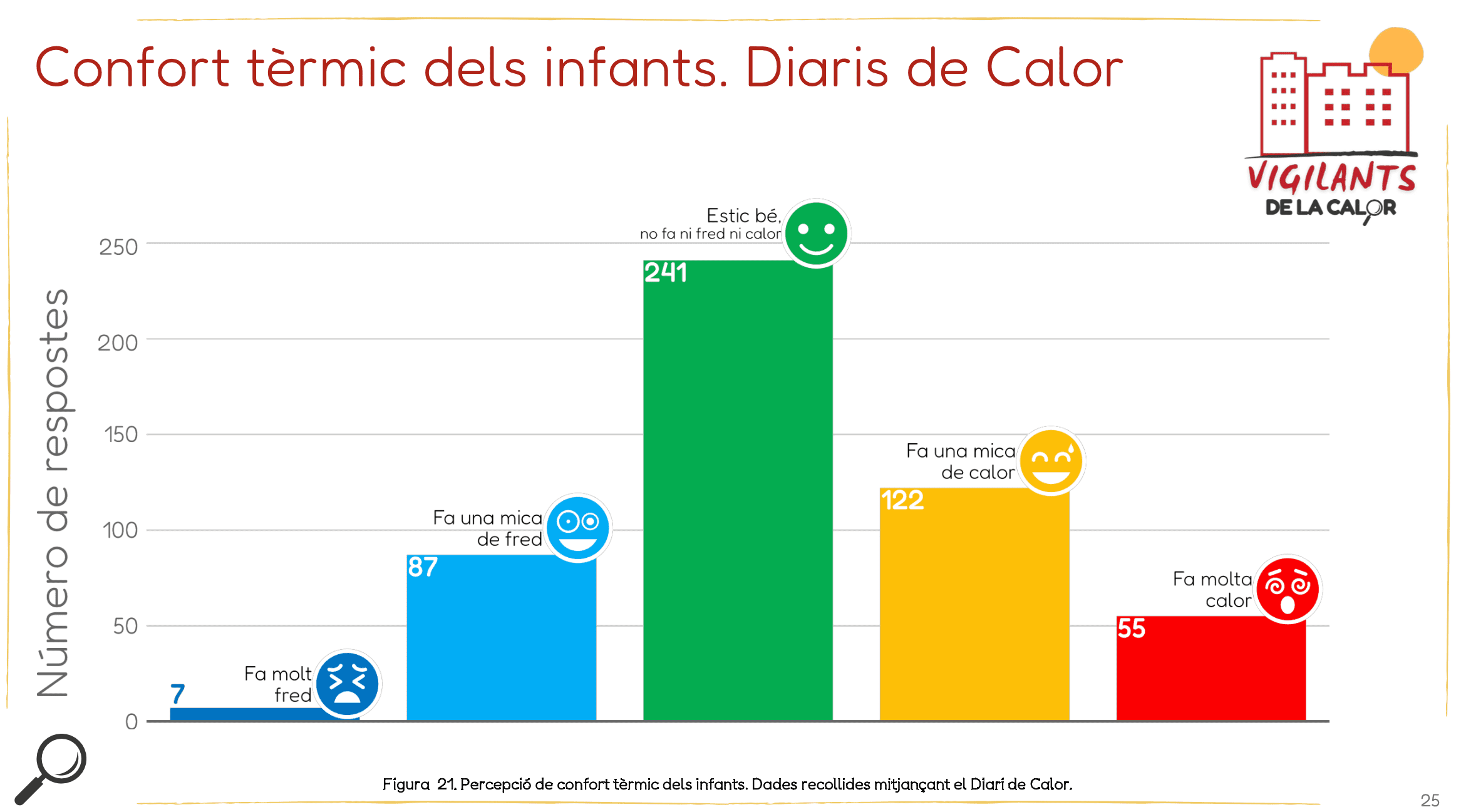
With the collected data, it has been possible to obtain a detailed analysis of the participants’ homes, the equipment they have and use, and the strategies they implement to cope with heat at home. These findings reveal that factors such as the, the age and type of buildings, the availability of air conditioning equipment, and household habits condition how heat influences homes. Additionally, it has been observed that, despite monitoring a period of mild heat, the perception of thermal discomfort has been quite high.
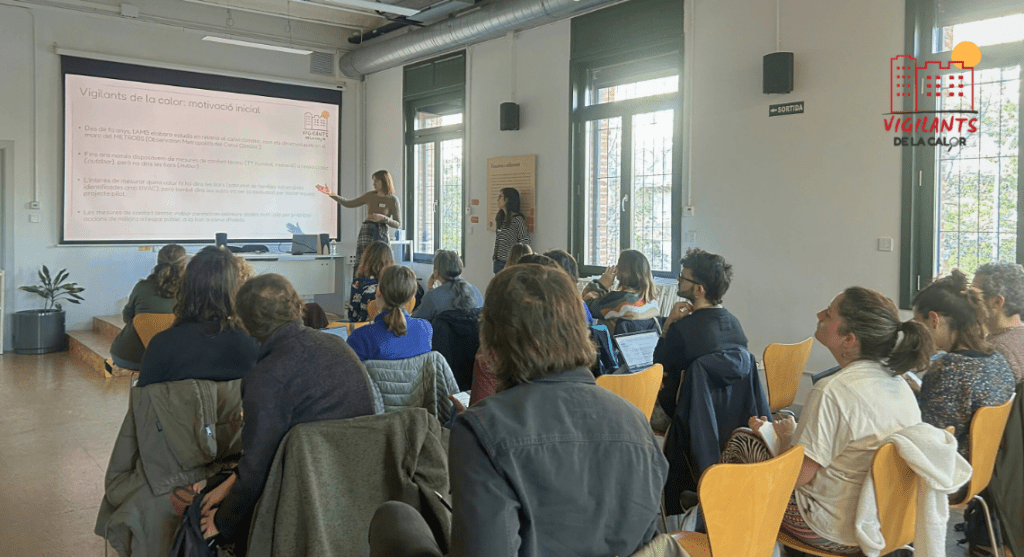
As a final event of the project, the act titled “La calor percebuda pels infants de la metròpoli” was celebrated on January 15th at La Fàbrica del Sol in Barcelona. In this event, the tools, results and lessons learned within the project were shared with sustainability, education, health, housing and urban planning professionals, and the practical application of the proposals co-created by the students to cope with the heat was analysed and discussed.
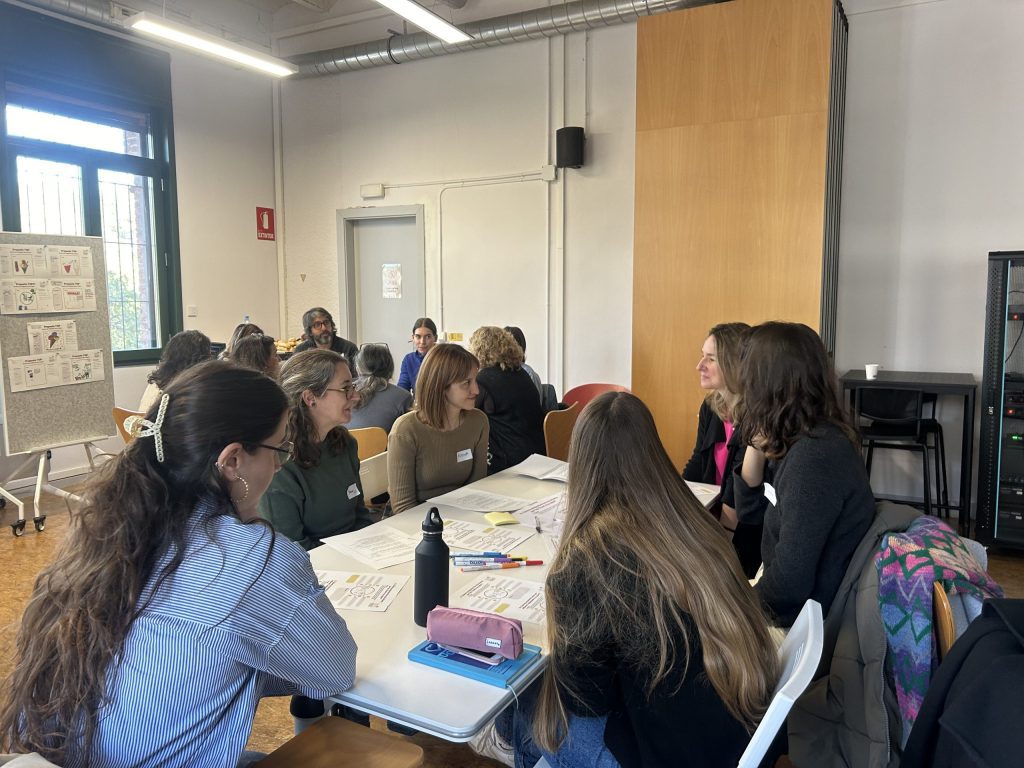
These results and lessons will serve as the basis for scaling this initiative and replicate it in other educational centres and neighbourhoods of the Metropolitan Area of Barcelona. In fact, from the third trimester of the 2024-2024 academic year, the project will be included in the Service Learning (APS) catalogue of the AMB Environmental Education, Compartim Futur, and it will be offered to primary and secondary schools.
You can find all the materials and publications of the project here.
Acknowledgments
IMPETUS is funded by the European Union. Views and opinions expressed are however those of the author(s) only and do not necessarily reflect those of the European Union. Neither the European Union nor the granting authority can be held responsible for them.
