
What is Energy Storage, Harvesting and Catalysis all about?
- Developing high-performance batteries for grid-scale and distributed energy storage.
- Producing renewable hydrogen and synthetic fuels through solar and electrochemical routes.
- Designing autonomous energy systems integrating harvesting, storage and smart management.
- Modelling reactors and simulating processes to bridge laboratory innovation and pilot scale.
Energy Storage, Harvesting & Catalysis
The Energy Storage, Harvesting and Catalysis department investigates materials, processes and systems across electrochemical energy storage, sustainable fuels and autonomous energy management. Our research combines materials synthesis, electrochemistry, catalysis, CO₂ valorisation and reactor engineering, with activities spanning from fundamental materials science through to pilot-scale demonstrators. Working through both competitive and industrial projects, we develop and validate technologies that support the transition to a decarbonised energy system.
Electrochemical Batteries
We develop electrochemical battery technologies spanning redox flow batteries and advanced lithium-based systems, combining materials innovation with cell and stack engineering. Our prototypes are validated under realistic operating conditions, targeting applications in grid-scale storage, industrial energy management and distributed renewable systems.
Sustainable Fuels
We develop solar-driven and electrochemical processes for renewable hydrogen production and CO₂ valorisation, achieving solar-to-hydrogen efficiencies above 18% and solar-to-fuels above 15%. Our research also advances plasma-catalytic and thermoconversion routes for synthetic fuel production, with pilot-scale activities in renewable hydrogen and synthetic methane generation.
Harvesting and Supercapacitors
We design supercapacitors for self-sufficient energy systems, integrating energy harvesting and storage to enable effective energy management in remote and distributed applications where grid connectivity is unavailable or unreliable.
Reactor Modelling and Process Simulation
We develop microfluidic models, reactor engineering tools and process simulations to optimise electrolysers, plasma-catalytic systems and chemical reactors, enabling the transition from laboratory-scale innovation through to pilot-scale implementation.
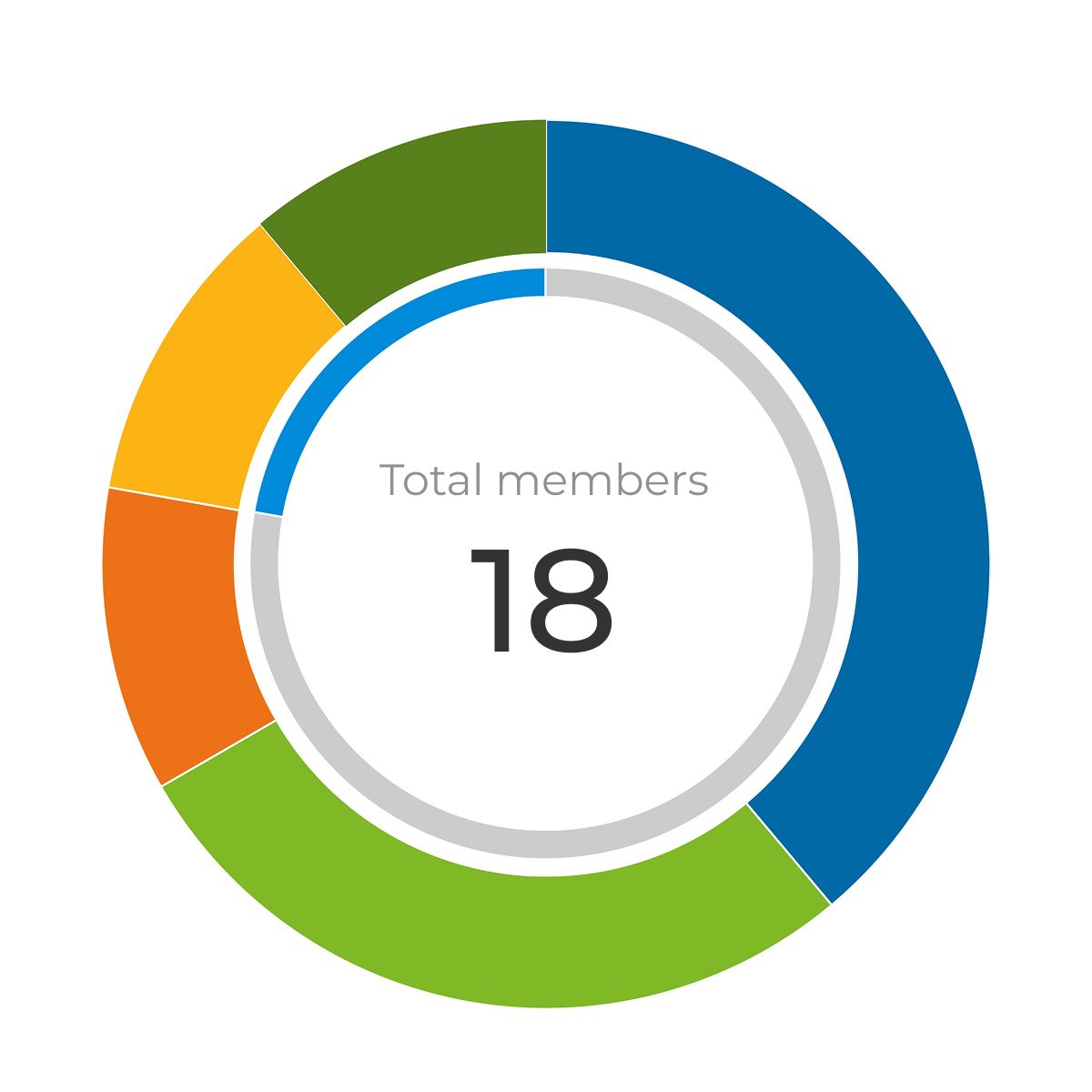
Our activity at a glance
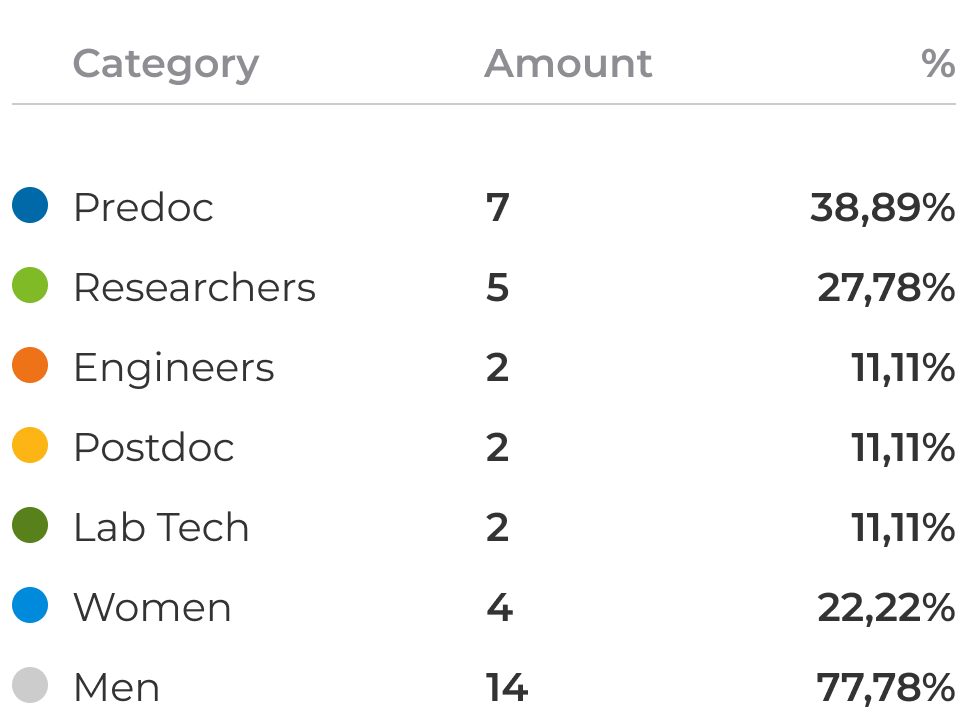
The department brings together a multidisciplinary team of researchers and specialists working across its core research areas. Our work combines fundamental research, technology development and applied validation, engaging with academic institutions, industry partners and public bodies to generate knowledge and solutions with real-world impact.
A department expert team
Our research lines
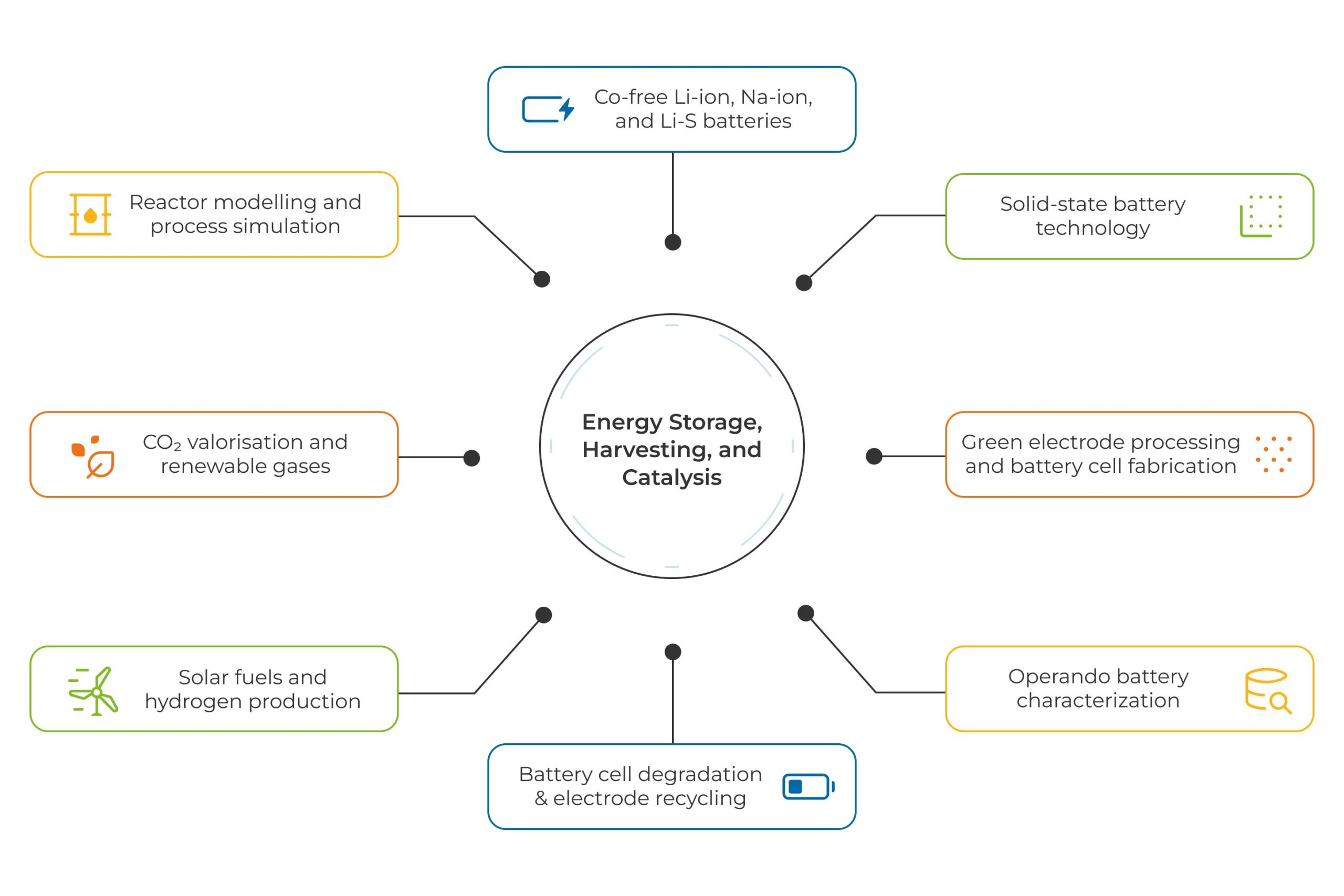
Research lines
- Battery Materials
- Sustainable Fuels
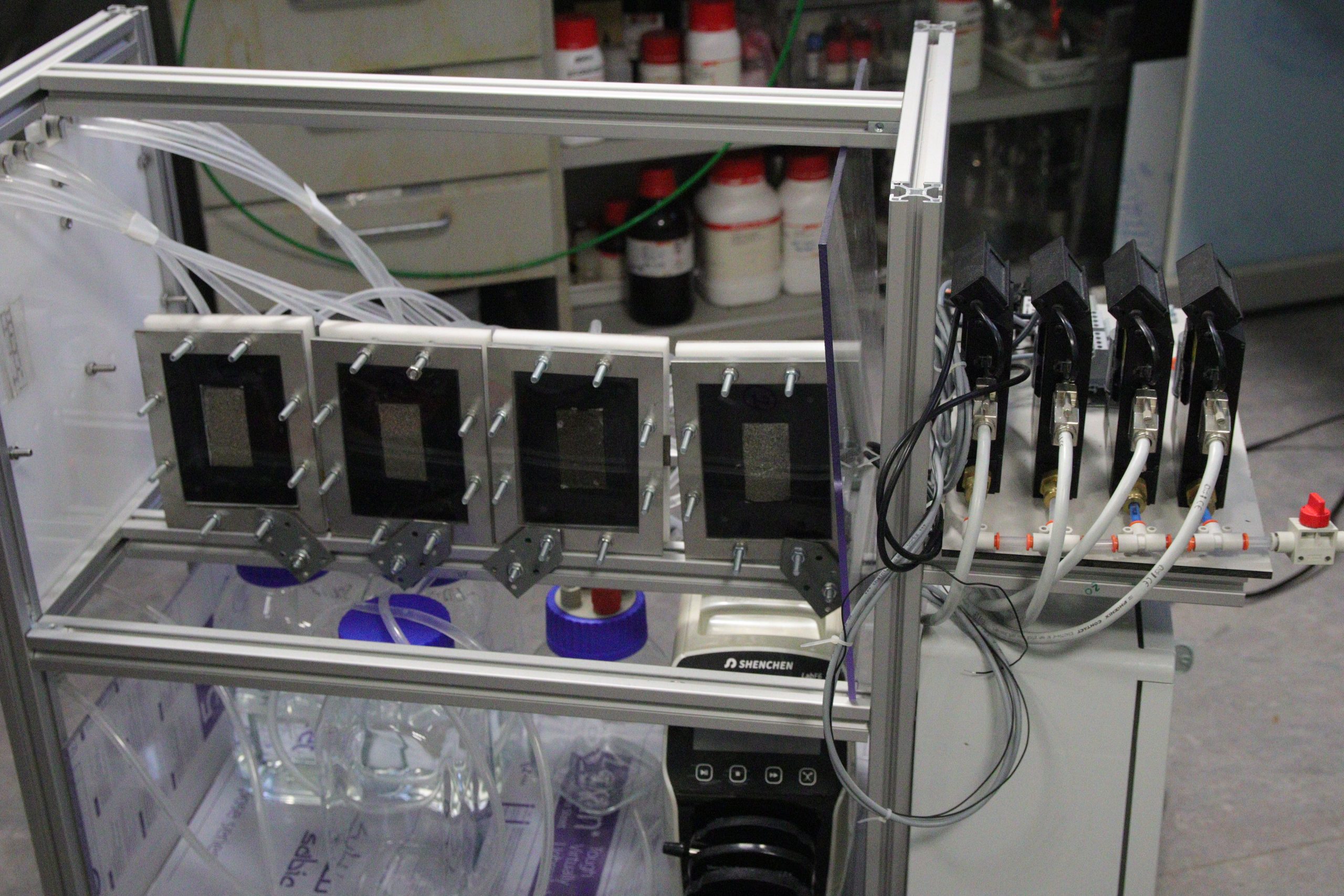
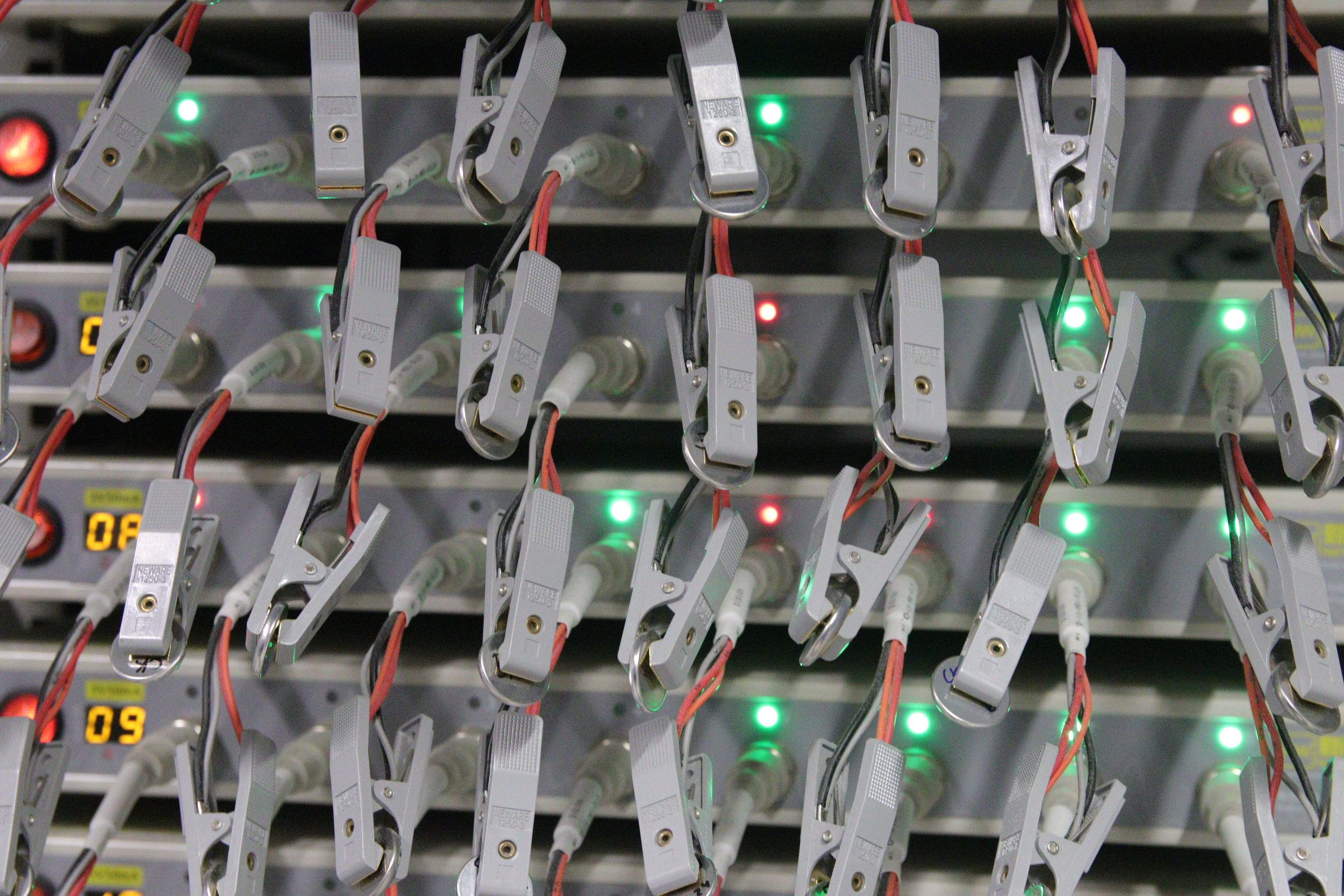
Battery Materials (ESHC-Bat) develops electrochemical energy storage technologies across redox flow batteries and advanced lithium-based systems, including lithium-sulfur chemistries. We combine materials synthesis, electrode engineering and cell design to build competitive prototypes validated at industrially relevant scales. Our work targets applications in grid-scale energy storage, industrial energy management and the integration of distributed renewable generation, contributing to safer, more sustainable and higher-performance storage solutions.
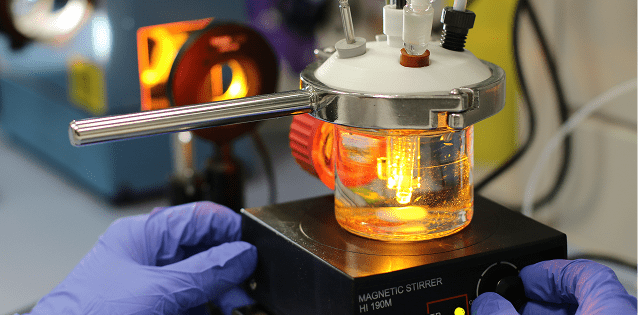
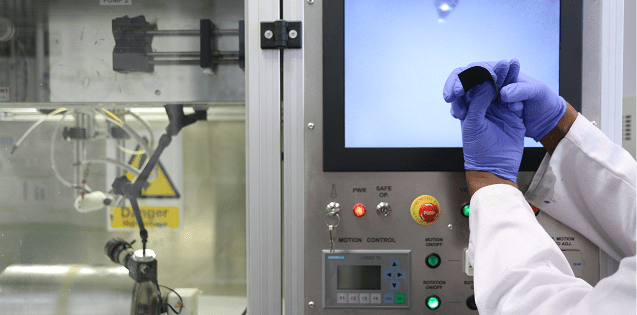
Sustainable Fuels (ESHC-Fuel) develops solar-driven and electrochemical processes for renewable hydrogen production, synthetic methane and CO₂ valorisation. Our research integrates photoelectrochemical and thermochemical conversion routes alongside plasma-catalytic systems, achieving solar-to-hydrogen efficiencies above 18% and solar-to-fuels above 15%. Working from fundamental catalysis through to pilot-scale demonstrators, we translate laboratory advances into viable production processes for renewable and synthetic fuel applications.
People
A skilled team dedicated to advancing the energy transition.
Projects
Competitive and industrial projects from lab to real-world scale.
Publications
Peer-reviewed outputs at the forefront of energy research.
Facilities
Facilities
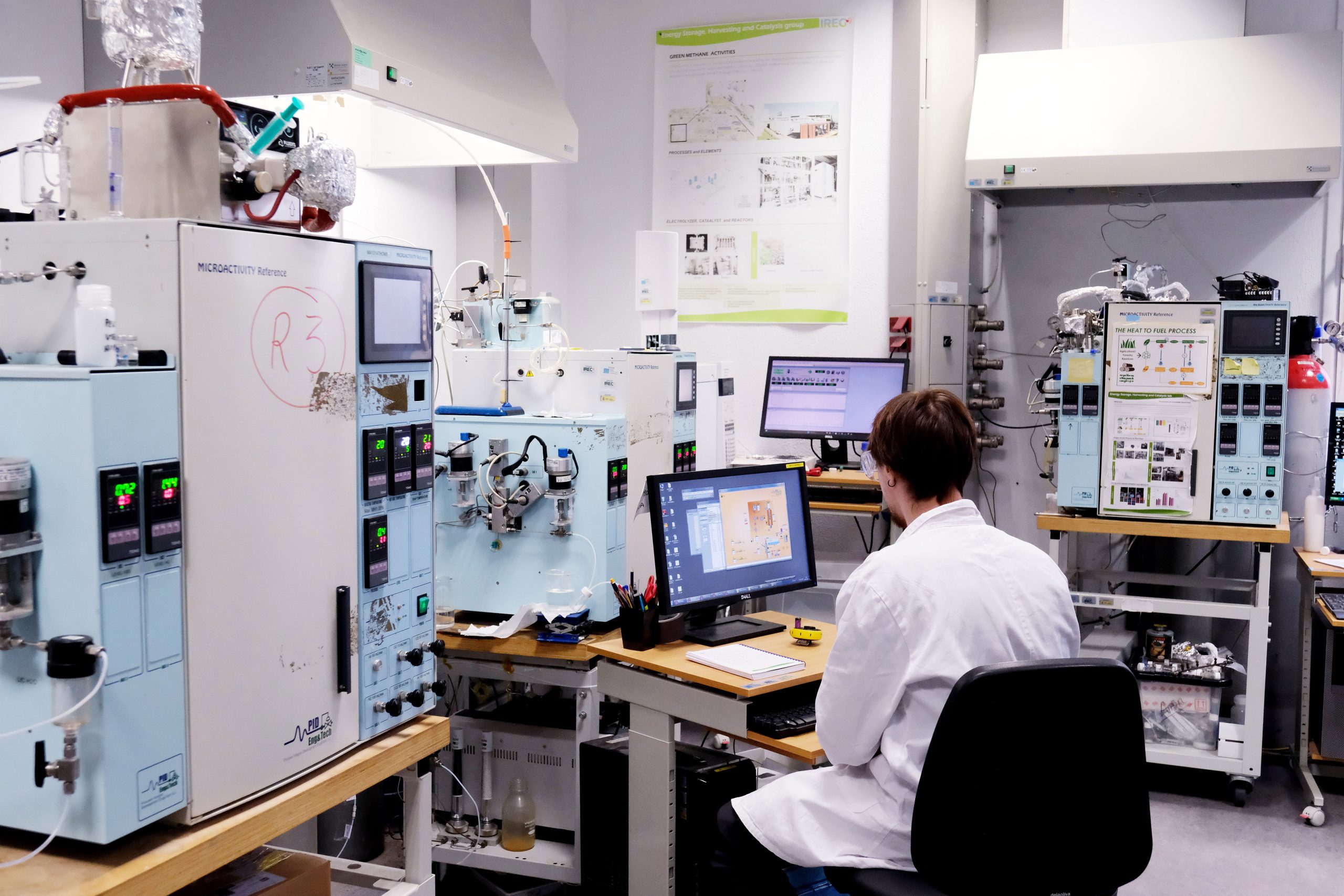
The department operates three specialised laboratories covering the full spectrum of energy storage and conversion. The Battery Laboratory integrates electrode fabrication, cell assembly and electrochemical testing under controlled conditions. The Electrochemistry Laboratory is equipped for photoelectrochemical characterisation, electrolysis and advanced analytical techniques including gas chromatography and mass spectrometry. The Catalysis Laboratory supports catalyst development, reactor testing and plasma-catalytic process validation. Complementary analytical platforms (XRD, SEM, BET, TEM) are available through institute-wide shared infrastructure.
Tech Transfer
The Energy Storage, Harvesting and Catalysis department translates its research into practical solutions through close collaboration with industrial partners, system integrators and public institutions. Our technology transfer activities span battery technologies for grid-scale and industrial applications, solar-fuel reactors, power-to-gas systems and plasma-catalytic processes for CO₂ valorisation. Through competitive and industrial projects, we have delivered demonstrators and pilot plants validating these technologies at pre-commercial scale.
News
Discover the latest news from our research teams and strategic initiatives.
-

NEXTGEN 2026 strengthens international collaboration in photovoltaics
Researchers, industry specialists and early-career scientists met in Palma de Mallorca from 8 to 10 September for the seventh edition of NEXTGEN, the Next Generation High Efficiency Photovoltaics International School and Workshop. Organised by IREC in collaboration with UPC, TalTech, and supported by ReNewPV, a European COST Action connecting academic and industry researchers working on…
Read more: NEXTGEN 2026 strengthens international collaboration in photovoltaicsPablo Fernández Martínez
Vulputate aliquam gravida
-

IREC launches Gara CHECK Awards to promote critical thinking about energy in schools
IREC has launched the first edition of the Gara CHECK Awards, a competition for schools across Catalonia that combines energy education, critical thinking and audiovisual communication. The initiative aims to encourage students to learn more about the energy transition and renewable energies while developing the skills needed to identify and challenge misinformation through scientific evidence…
Read more: IREC launches Gara CHECK Awards to promote critical thinking about energy in schoolsPablo Fernández Martínez
Vulputate aliquam gravida
-
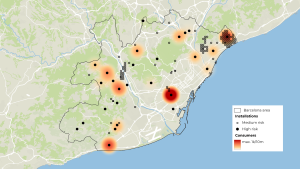
IREC assesses the impact of floods on Barcelona’s electricity infrastructure
IREC has developed a planning tool that allows to locate and quantify the risks that flooding can pose to the electricity grid in the Barcelona metropolitan region. The aim is to help public authorities make early decisions on climate adaptation based on scientific data. Over the past three years, the European project ICARIA, led by…
Read more: IREC assesses the impact of floods on Barcelona’s electricity infrastructurePablo Fernández Martínez
Vulputate aliquam gravida