
What is NANOIONICS & FUEL CELLS all about?
- Advanced solid oxide fuel cells and batteries for clean energy conversion and storage.
- Iontronic devices for low-power edge computing and neuromorphic applications.
- 3D manufacturing for scalable, reproducible energy device fabrication.
- Accelerated materials discovery through autonomous AI-driven laboratories.
Nanoionics & fuel cells
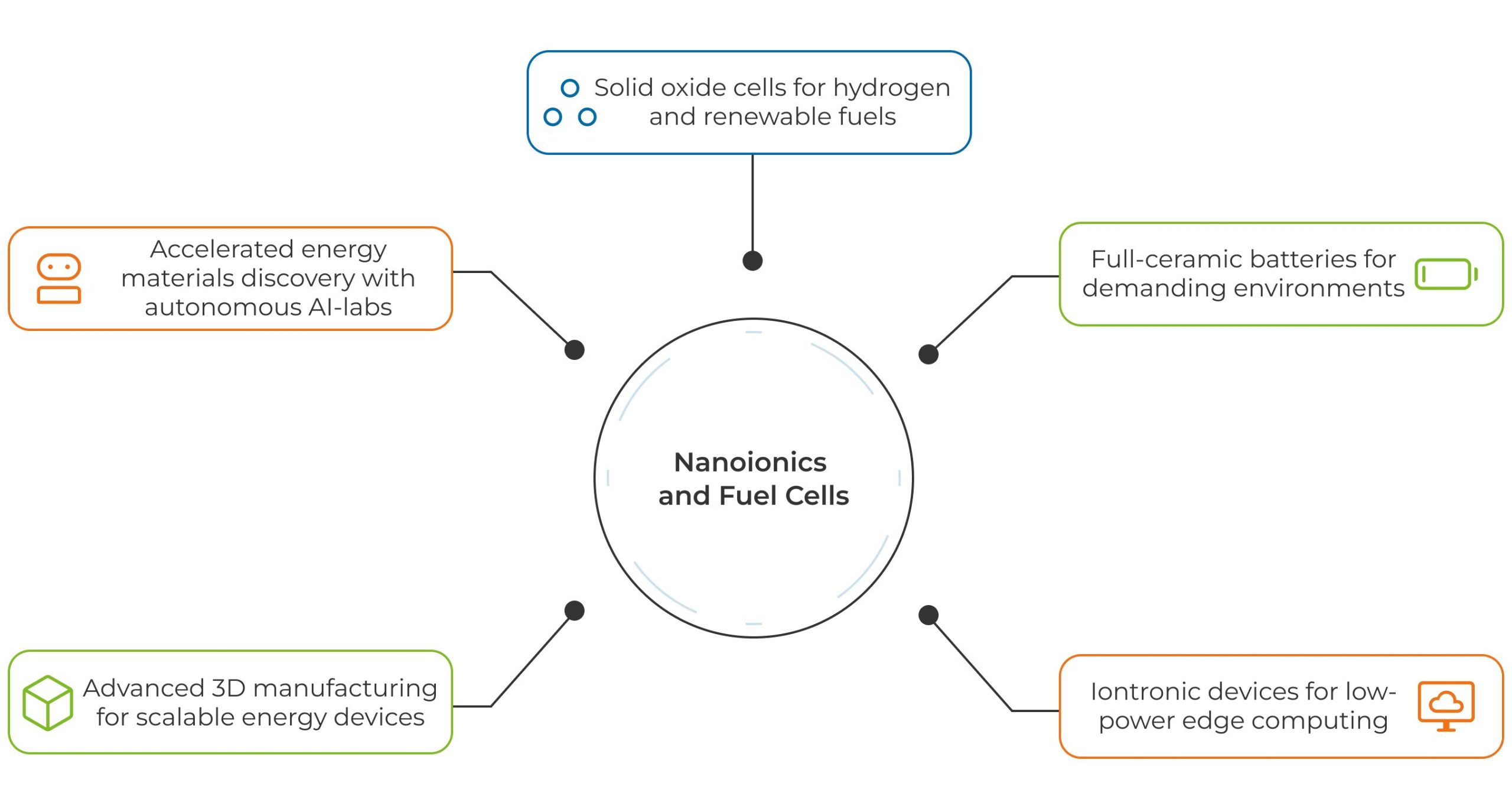
The Nanoionics and Fuel Cells department develops advanced solid-state technologies by combining materials engineering, 3D manufacturing and accelerated discovery processes. Our research spans efficient solid oxide cells for hydrogen applications, full-ceramic batteries for demanding environments, and iontronic devices for low-power computing. A unifying focus across all activities is the systematic reduction of critical raw materials (CRMs) through alternative chemistries, thin-film strategies and additive manufacturing. By integrating autonomous AI-driven laboratories with device-level validation, we deliver scalable, resource-efficient technologies for clean energy and smart systems.
Solid Oxide Cells for Hydrogen Technologies
We develop solid oxide fuel and electrolysis cells using advanced materials, thin-film engineering and 3D-printed architectures to deliver efficient, durable and scalable solutions for hydrogen production and sustainable fuel generation.
Full-Ceramic Battery Technologies
We design full-ceramic battery architectures enabled by advanced processing and ion-conducting 3D-printed components, targeting safe, thermally stable storage for harsh environments and critical infrastructure applications.
Iontronics and Low-Power Computing
We develop iontronic devices and neuromorphic concepts that enable stable, low-power edge computing for autonomous sensing and connected IoT systems, integrating tunable oxide frameworks and silicon-compatible designs.
Accelerated Discovery and AI-Driven Workflows
We accelerate materials innovation through autonomous AI-driven laboratories, combinatorial material libraries, high-throughput experimentation and machine-learning models, shortening the path from discovery to device-level validation.
Our activity at a glance
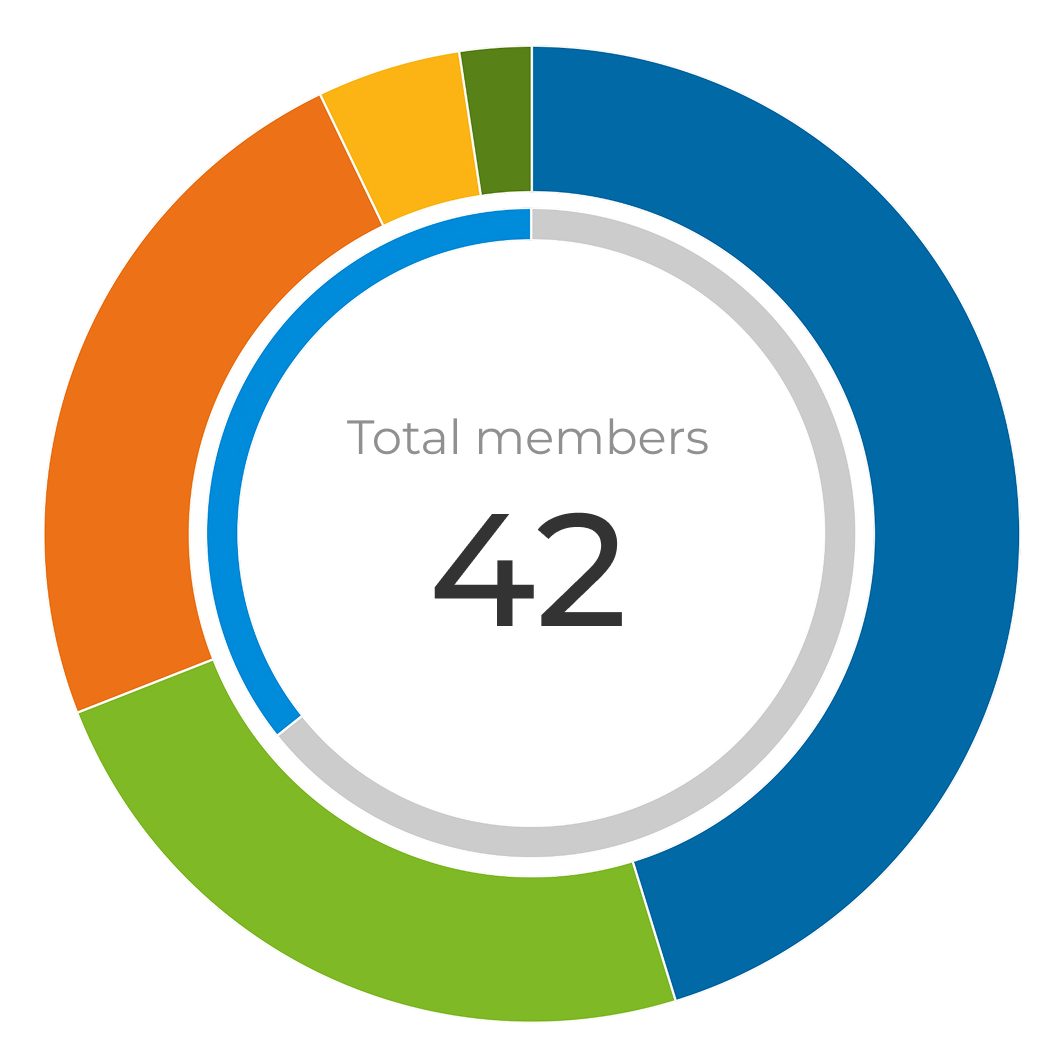
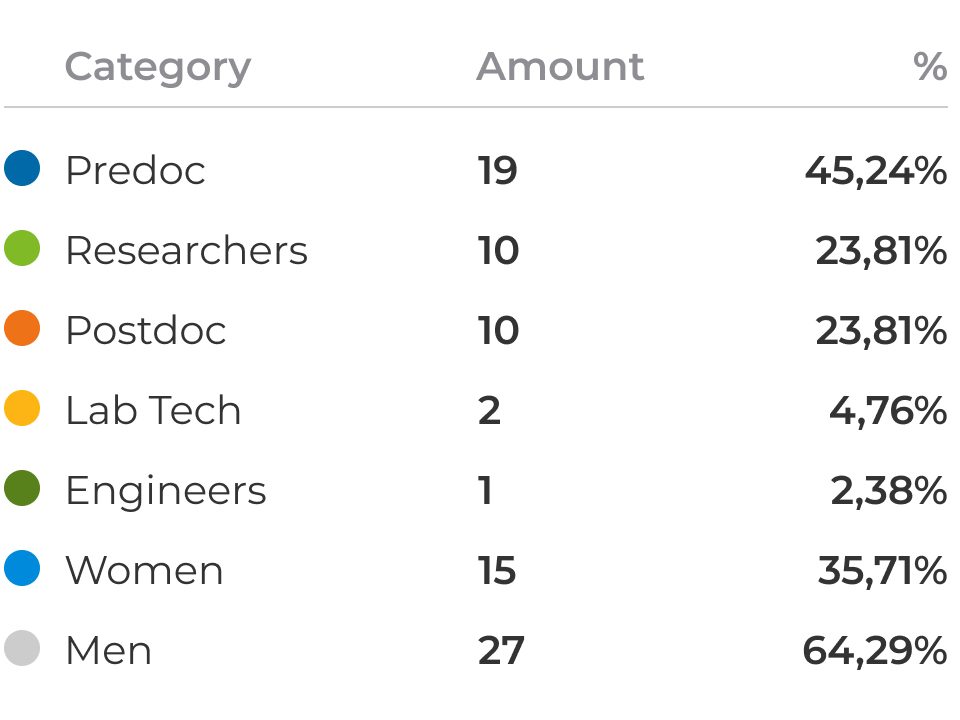
The department brings together a multidisciplinary team of researchers and specialists working across its core research areas. Our work combines fundamental research, technology development and applied validation, engaging with academic institutions, industry partners and public bodies to generate knowledge and solutions with real-world impact.
A department expert team
Our research lines
Research lines
- Solid Oxide Cells
- Ceramic Batteries
- Iontronics
- 3D Manufacturing
- Accelerated Discovery
We develop solid oxide fuel and electrolysis cells combining advanced materials, thin-film engineering and 3D-printed architectures. Our work targets efficient, durable and scalable solutions for hydrogen production, renewable fuel generation and industrial decarbonisation, reducing critical raw material intensity through compositional substitution and optimised device interfaces.
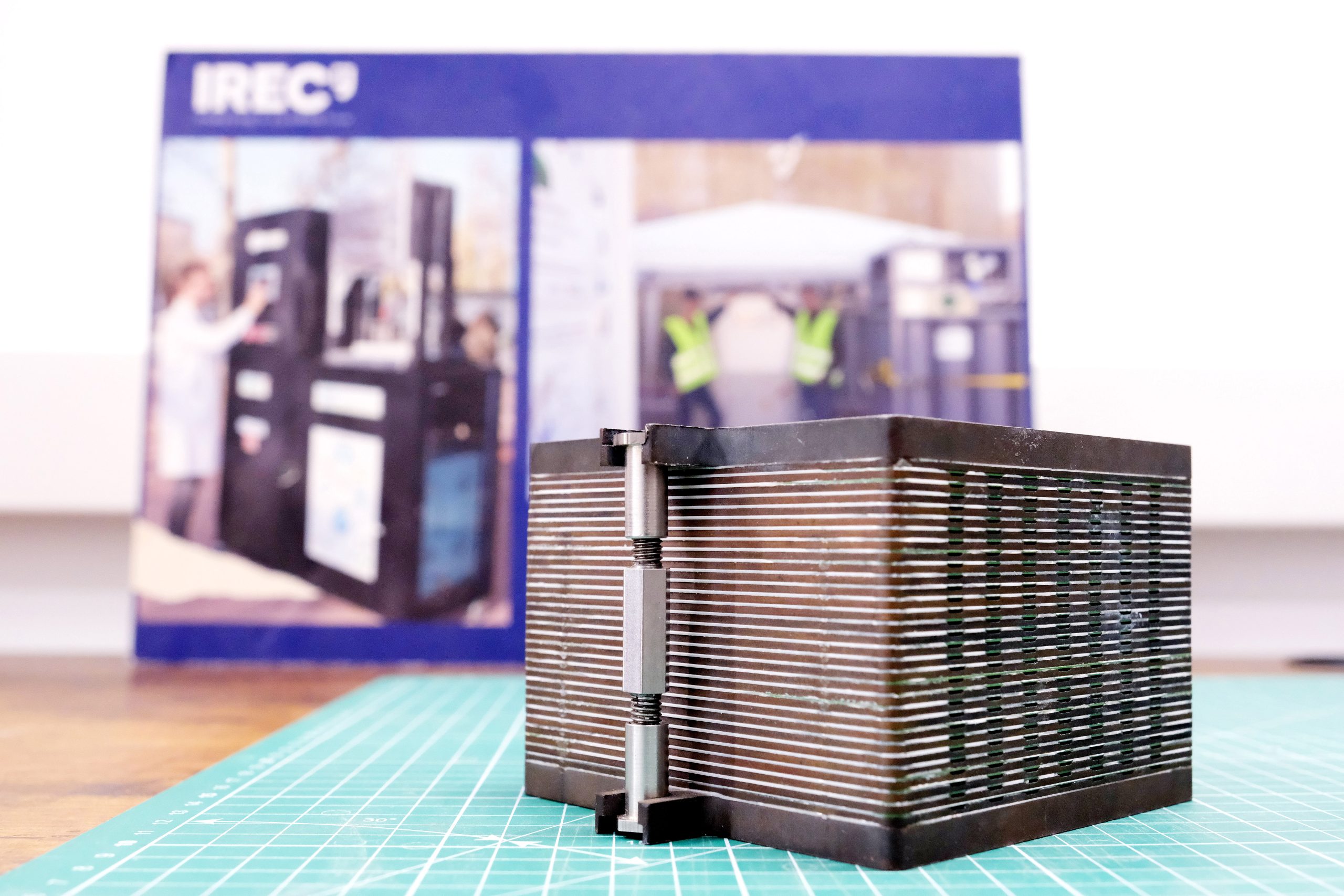
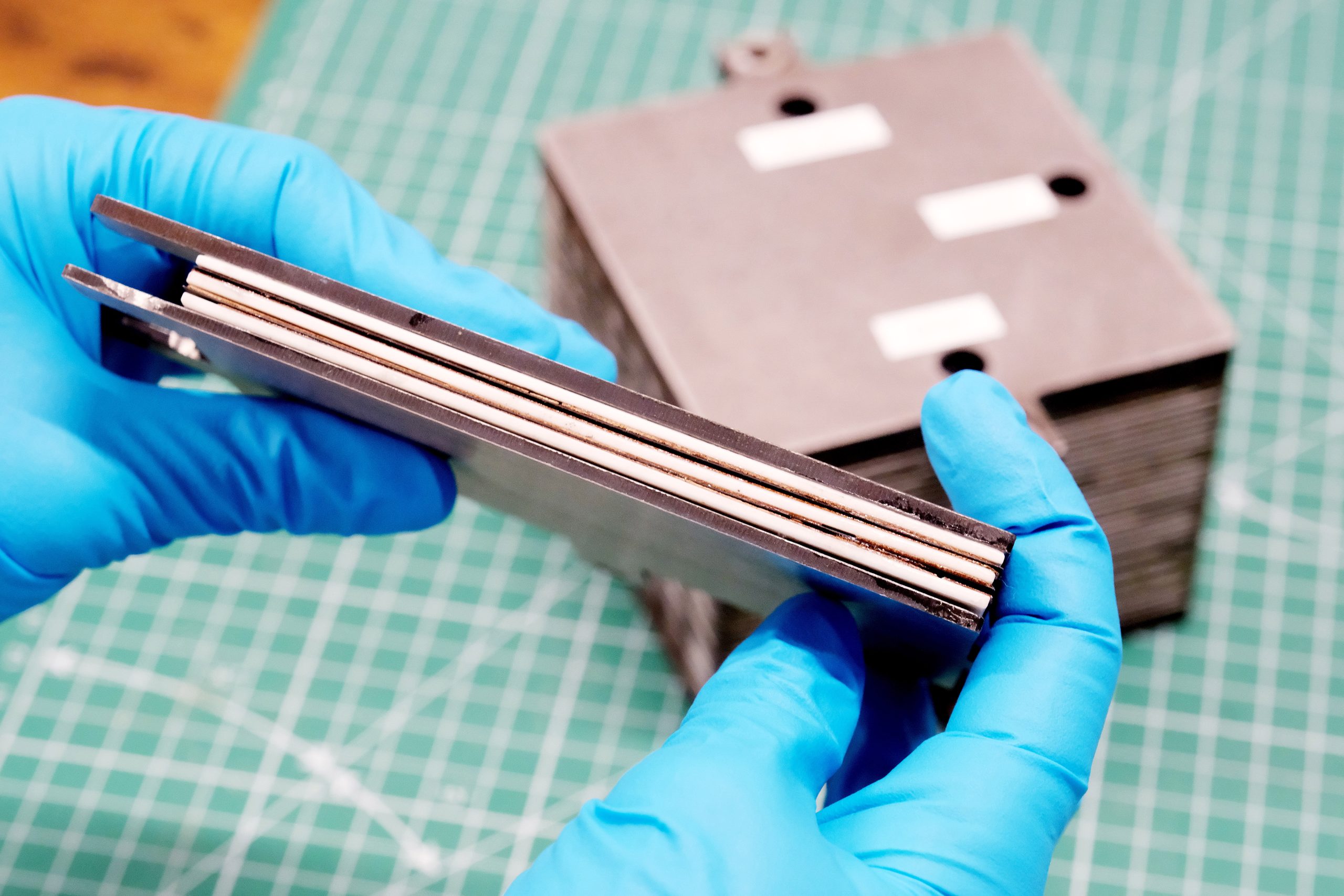
We design full-ceramic battery systems based on advanced ceramic processing and ion-conducting 3D-printed components. Our approach targets safe, thermally stable and resource-efficient energy storage for demanding environments and critical infrastructure applications where conventional battery chemistries present safety or supply-chain limitations.
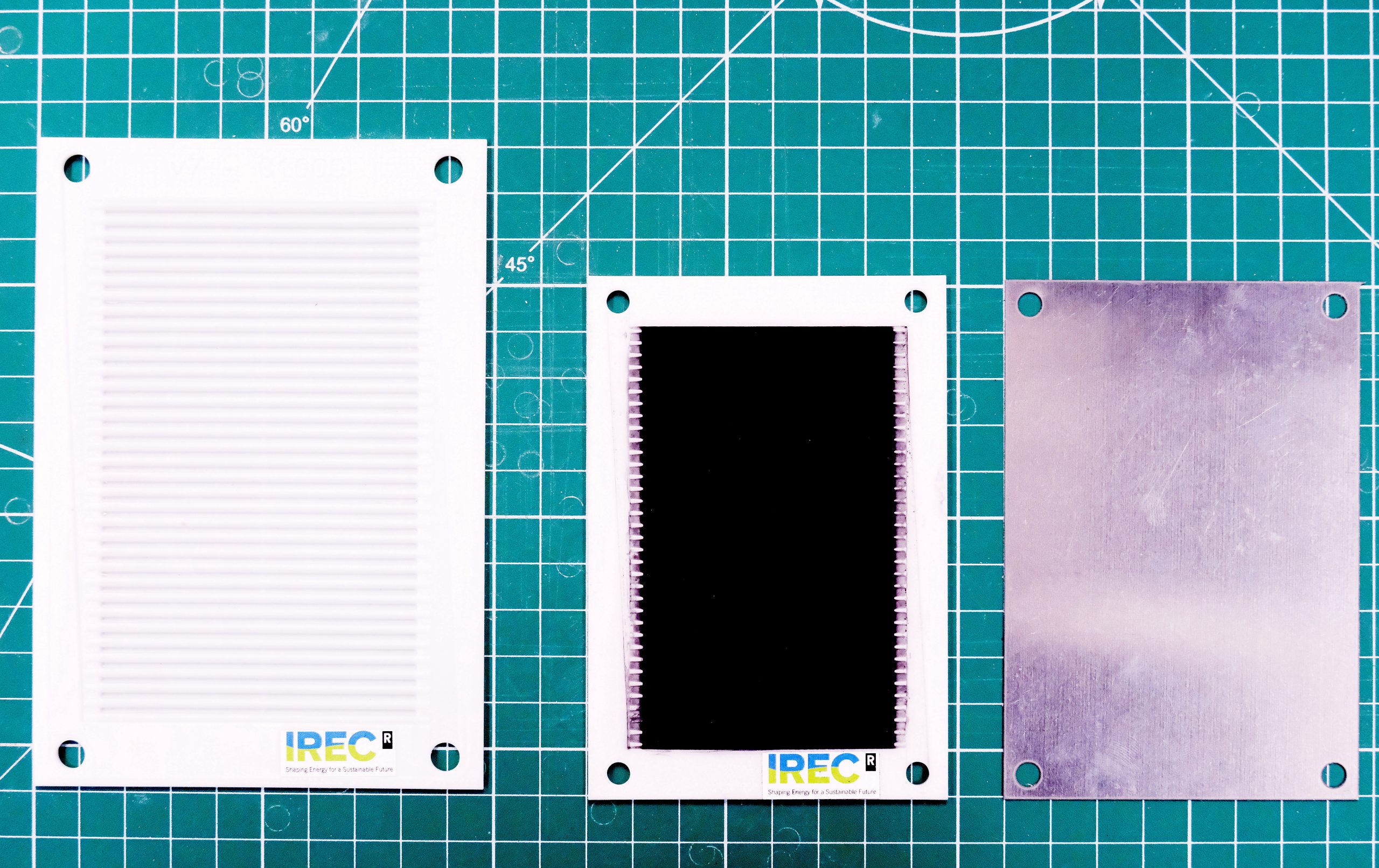
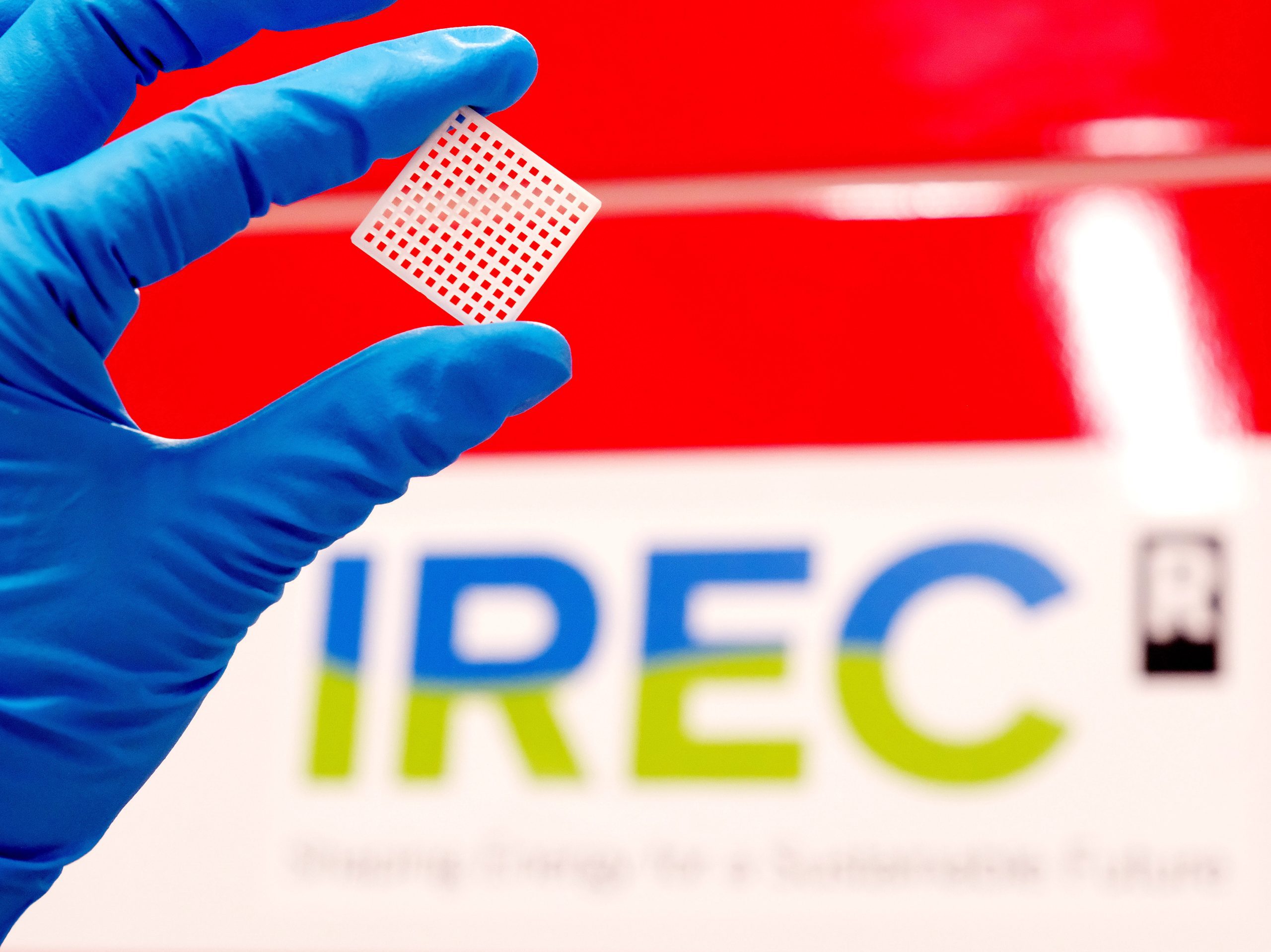
We pioneer iontronic and neuromorphic device concepts leveraging tunable oxide frameworks and silicon-compatible designs. These technologies enable stable, low-power edge computing for autonomous sensing, connected IoT systems and embedded intelligence, opening new pathways for smart systems beyond conventional semiconductor approaches.
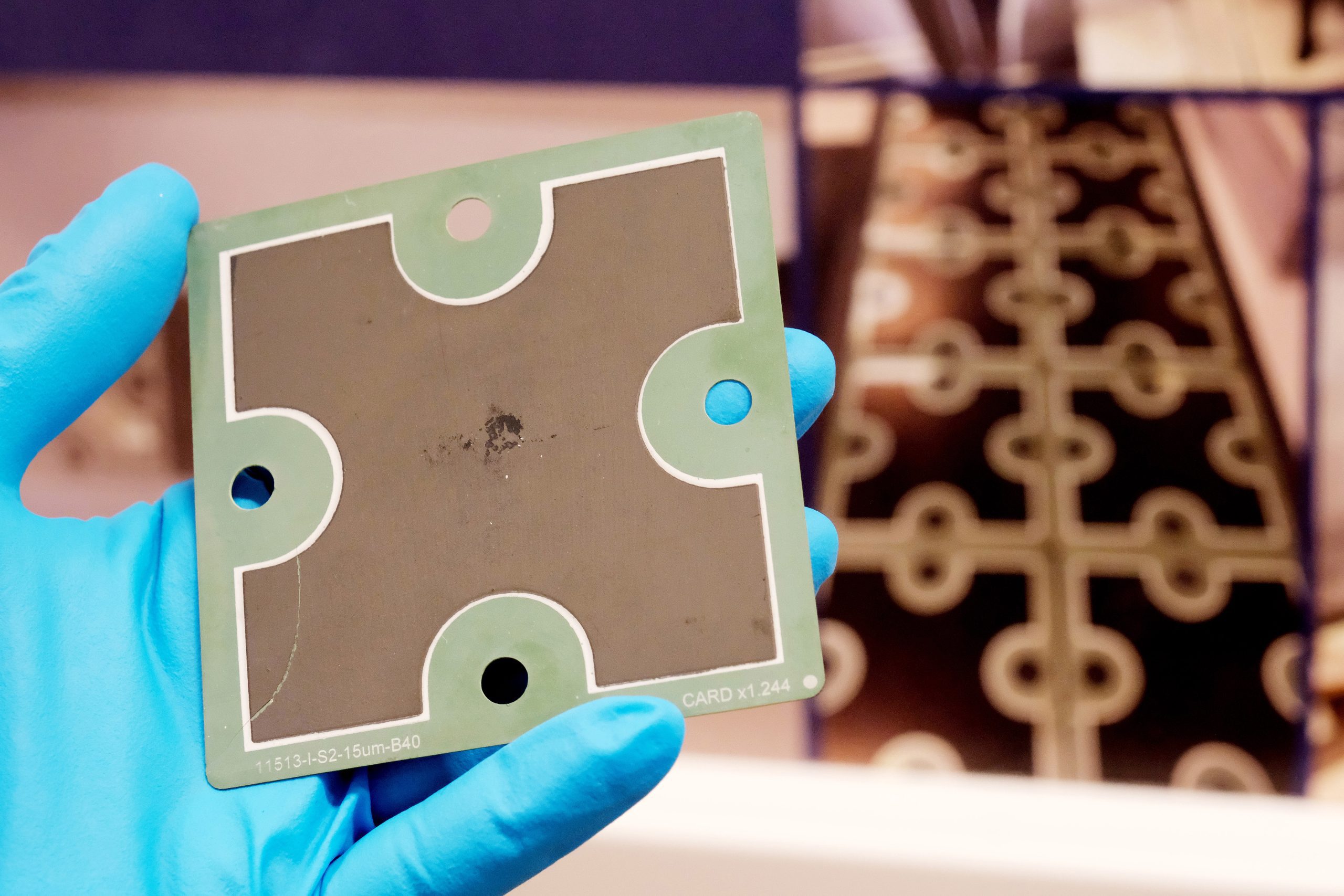
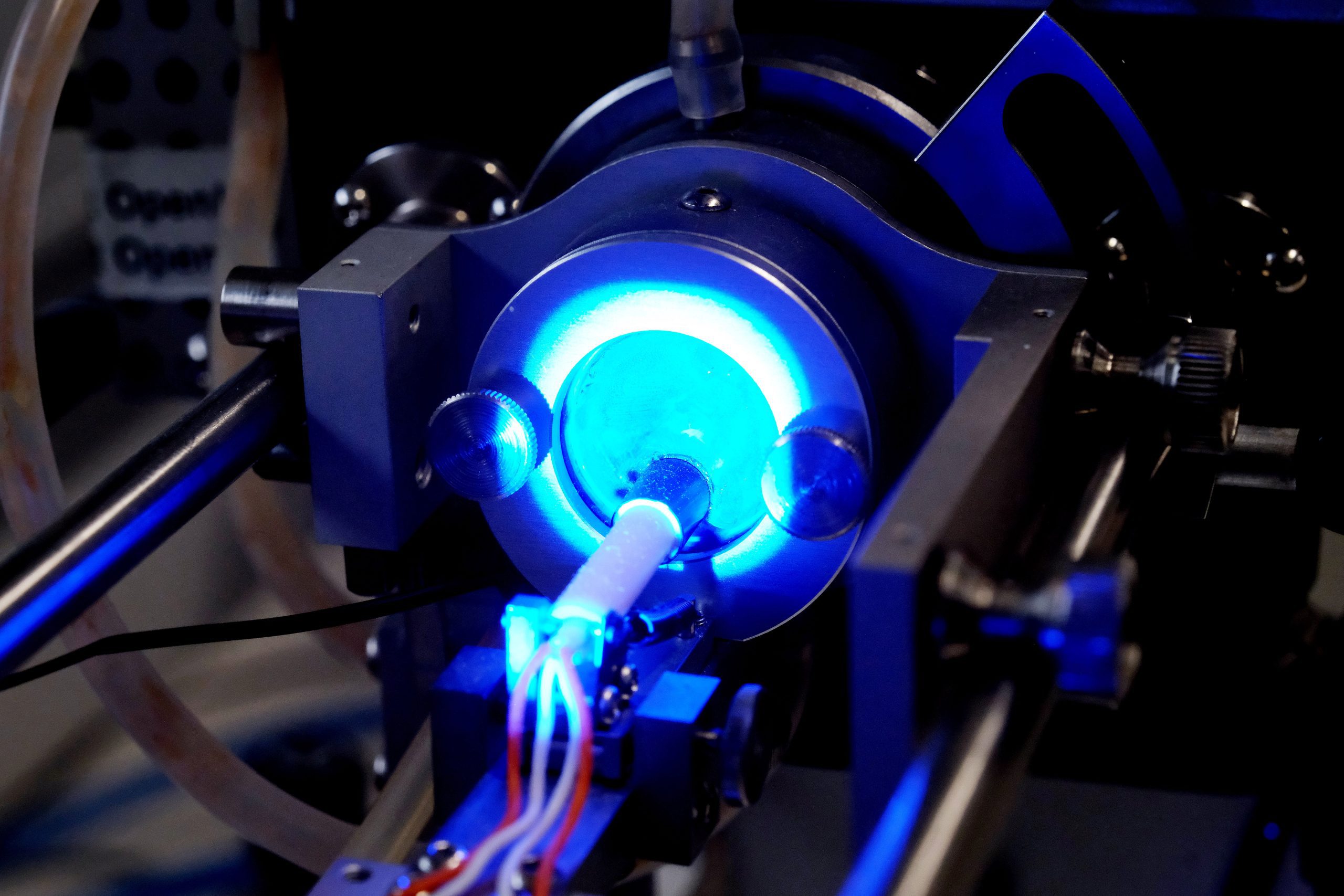
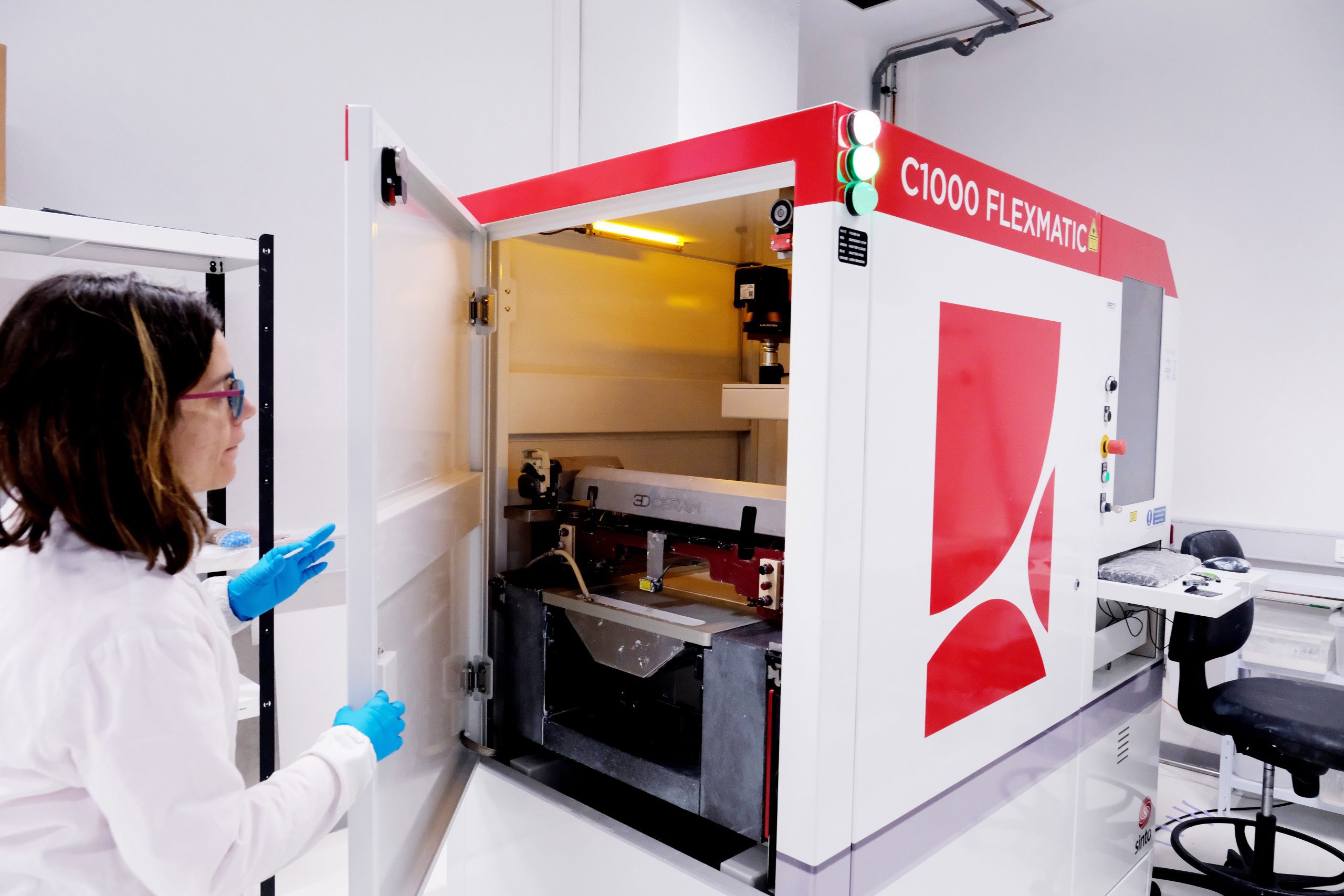
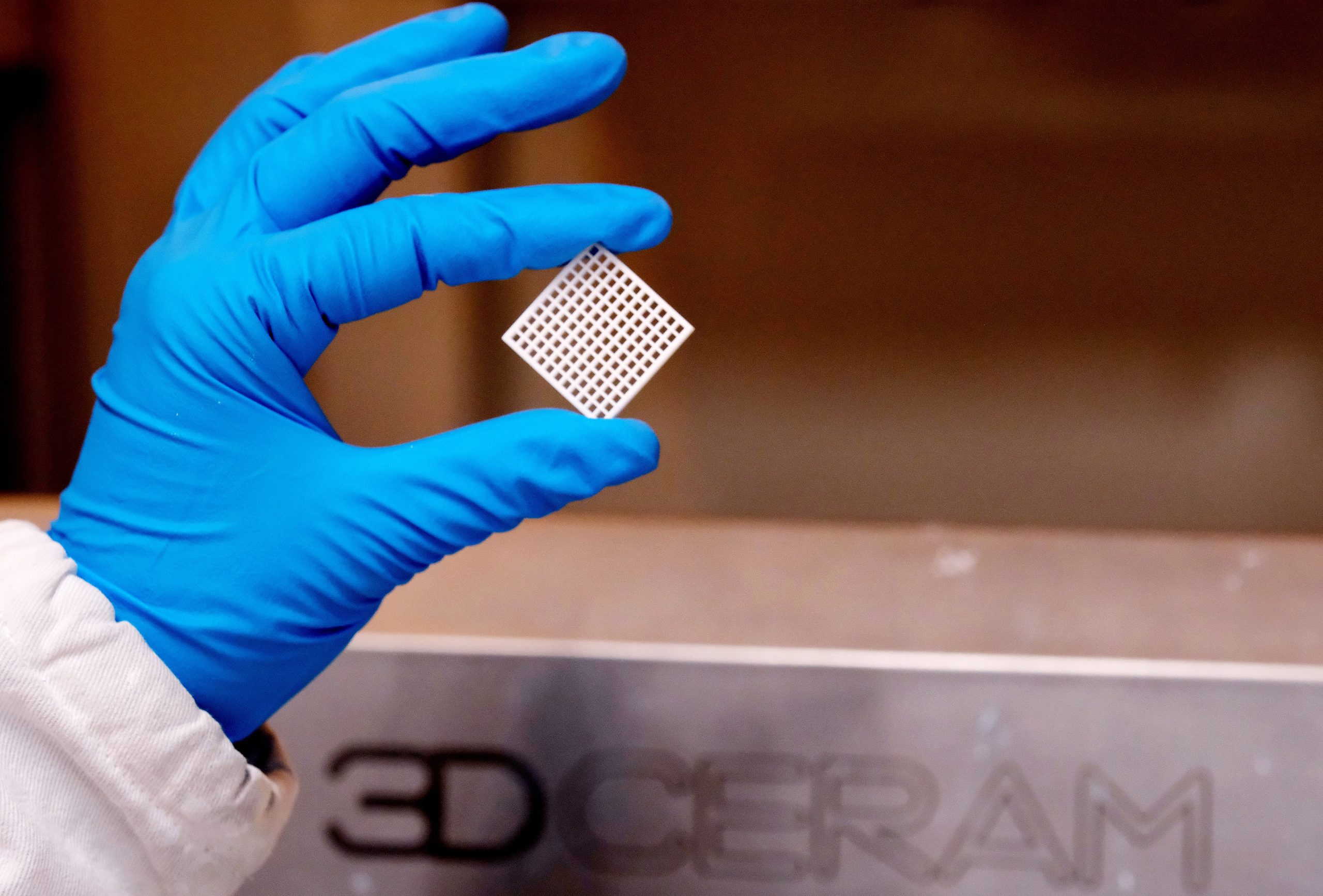
We develop advanced ceramic 3D-printing processes to fabricate solid-state energy devices with reproducible architectures and pre-industrial scalability. Our additive manufacturing capabilities underpin the entire department’s technology pathway, from thin-film solid oxide cells to full-ceramic batteries, enabling complex geometries, reduced material waste and faster iteration from design to validated prototype.
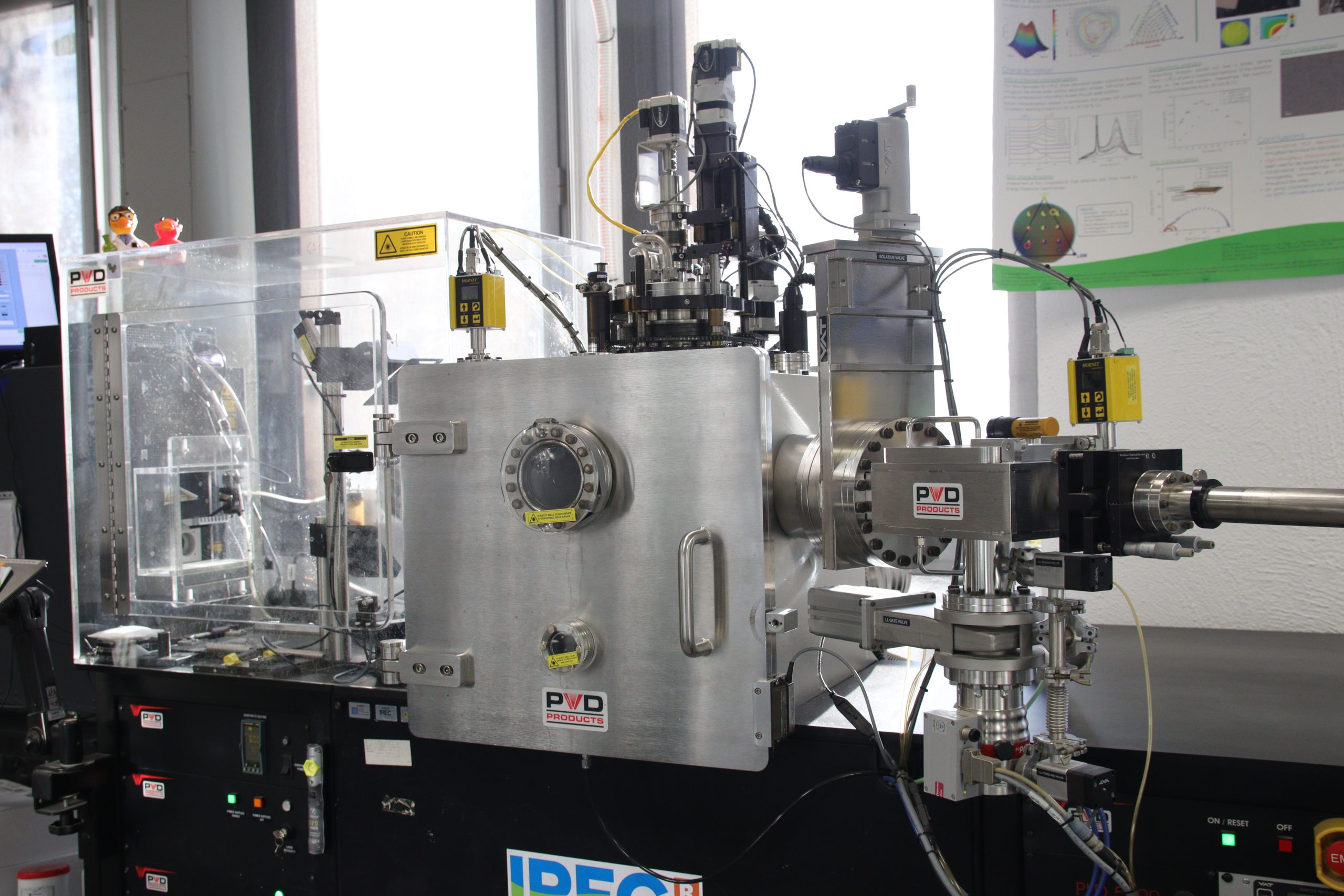
We integrate autonomous AI-driven laboratories, combinatorial material libraries and high-throughput experimentation to accelerate materials innovation across all our research lines. Machine-learning models and data-driven optimisation shorten the pathway from materials design to device-level validation, enabling faster development of scalable, low-CRM technologies.
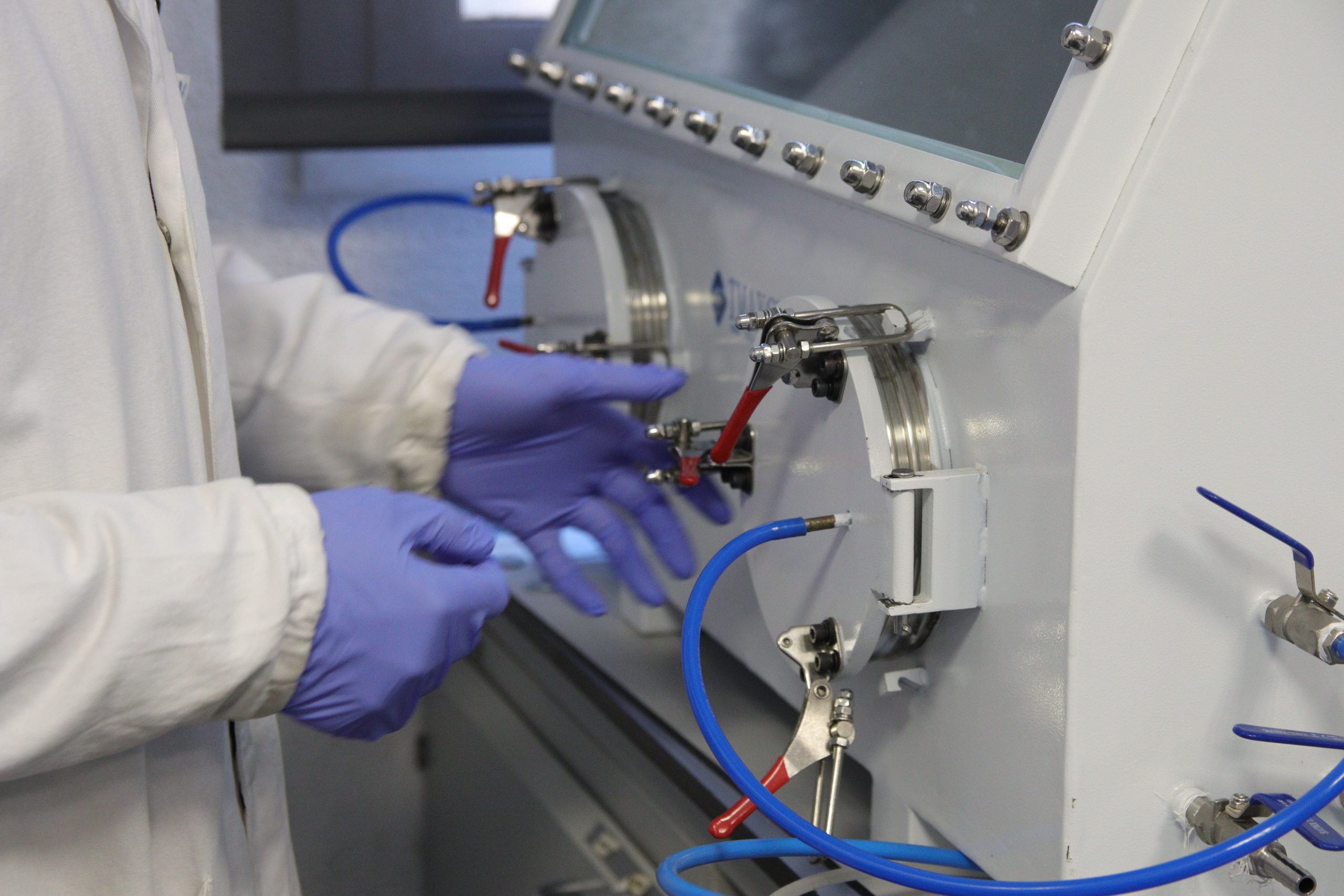
People
A skilled team dedicated to advancing the energy transition.
Projects
Competitive and industrial projects from lab to real-world scale.
Publications
Peer-reviewed outputs at the forefront of energy research.
Facilities
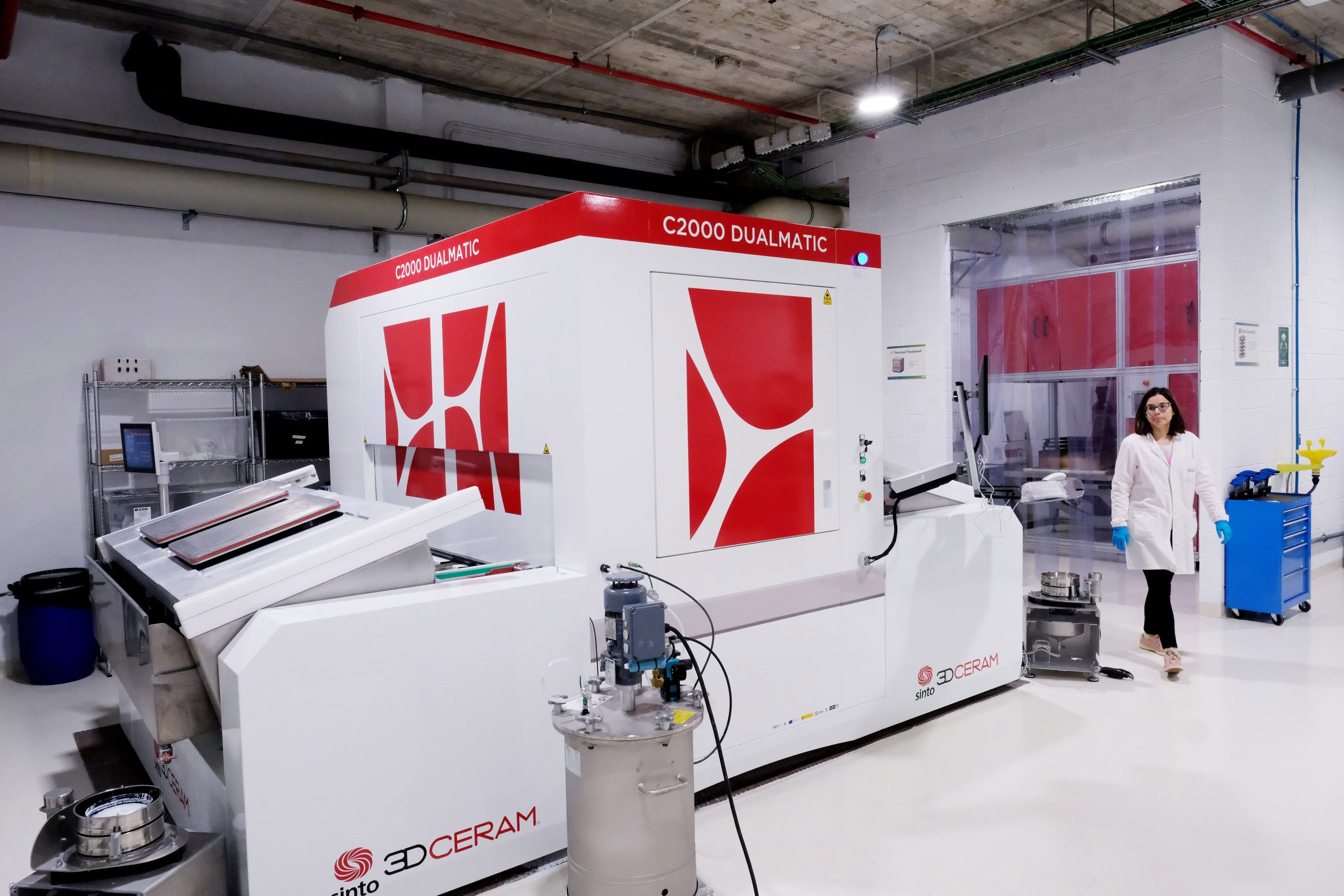
Facilities
The department hosts a distinctive research infrastructure that combines advanced ceramic processing and electrochemical characterisation with AI-assisted accelerated materials discovery, enabling the full pathway from materials design to pre-industrial solid-state prototypes. Anchored by the 3D-printing capabilities of MERCÈ Lab and by reversible SOFC/SOEC validation up to 10 kW, it provides a unique platform for scalable development and technology transfer in energy conversion and iontronic devices.
Tech Transfer
The department has built a strong technology transfer pathway around full-ceramic energy devices and iontronic technologies, with application potential spanning hydrogen production, renewable fuels, industrial decarbonisation, critical infrastructure, autonomous IoT and low-power computing. We work through industrial co-development, protected IP, pilot-line scale-up and stakeholder co-creation, collaborating with technology manufacturers, system integrators, end-users and public administrations and policy bodies. Partners and clients include H2B2, SolydEra, 3DCERAM Sinto, Viver Cleantech, AESA, CELSA, the Port of Barcelona and SNAM, with major contracts including Technopropia (proprietary 3D-printed SOEC technology with H2B2) and EFISOEC (with REPSOL and Técnicas Reunidas). Our outputs include validated stack prototypes, proof-of-concept iontronic transistors, durable micro-energy devices and MERCÈ Lab, the MW-scale pilot line for 3D-printed solid oxide cell technologies. Our IP portfolio covers patents on monolithic 3D-printed SOC stacks, freestanding membranes, composite thin films and oxide-ion transistor concepts, and these efforts culminated in the creation of OXHYD, a deep-tech spin-off founded in February 2026 for 3D-printed SOFC stacks in data centre and maritime applications. Beyond industry, the department has contributed to PROENCAT 2050 and prepared reports for the European Parliament and the Catalan Parliament. This trajectory was recognised with the 2025 Best Innovation Prize of the European Commission for work on 3D printing of SOFC/SOEC technologies.
News
Discover the latest news from our research teams and strategic initiatives.
-

IREC strengthens international collaboration on the life-cycle impacts through the IEA
IREC has contributed to the recently completed IEA TCP on Electric Vehicles Task 46, a global initiative assessing the full life-cycle environmental impacts of electric trucks, buses, specialised vehicles and V2X services. The project, led by Joanneum Research (Austria), brought together partners from Austria, Canada, Germany, the Netherlands, Norway, the Republic of Korea, Spain, Switzerland, the UK,…
Read more: IREC strengthens international collaboration on the life-cycle impacts through the IEAPablo Fernández Martínez
Vulputate aliquam gravida
-

A plan to adapt schools to climate change was presented today
A report prepared by a group of experts from the climate, health, social and education fields warns about the growing impact of heat in classrooms and states that, from 2030 onwards, there could be up to 65 days during the period school with temperature and humidity conditions that exceed heat index of 27°C — nearly…
Read more: A plan to adapt schools to climate change was presented todayPablo Fernández Martínez
Vulputate aliquam gravida
-
IREC researchers participate at the XI 10alamenos9 Festival
IREC is proud to take part in the 11th edition of 10alamenos9 Festival, the National event of Nanoscience and Nanotechnology, held this year on Saturday, 9 May 2026 at the Museu de la Ciència CosmoCaixa in Barcelona. The festival, which gathers some of Spain’s leading research centres and universities working in nanotechnology, is designed for family audiences and recommended for…
Read more: IREC researchers participate at the XI 10alamenos9 FestivalPablo Fernández Martínez
Vulputate aliquam gravida